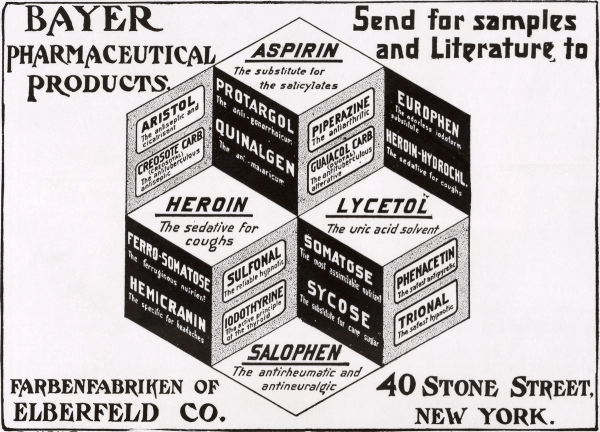
Reading time: 5 minutes Alex S. Woodell Most of us have taken acetylsalicylic acid at some point in our lives. This popular drug was first brought to market in 1899 by Bayer who coined the brand name Aspirin. Aspirin belongs to a class of drugs known as nonsteroidal anti-inflammatory drugs (NSAIDs) which are used to... Continue Reading →
Isotopic labeling: A peek inside cancer cells
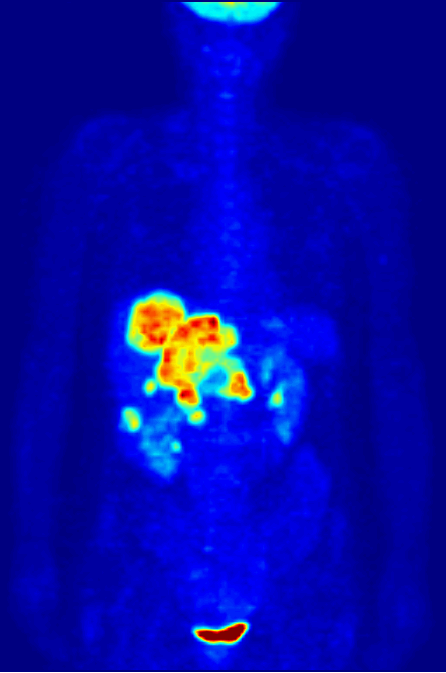
Reading time: 4 minutes Varshit Dusad Studying the growth of the tumor is very important to devise an effective treatment against cancer. Often cancer tissues are buried deep inside the body and we need diagnostic methods that can tell us about their progression accurately without harming the body while not losing the accuracy. Therefore, invasive... Continue Reading →
Reducing chemo side effects by soaking up excess drug
Reading time: 4 minutes Morgan McSweeney A research team from UC Berkeley, UCSF, and UNC Chapel Hill has developed a new strategy to prevent unwanted side effects of toxic chemotherapy drugs. Often, choosing a dose of chemotherapy has to be balanced between how effective it will be at killing tumor cells and how toxic it... Continue Reading →
Physical Education: The Anatomy of a Tumor
Reading time: 4 minutes Shaye Hagler Last spring, Sara introduced some of the ways tumors avoid being killed by both our own bodies’ defenses and the various treatments we throw at them; if you’ve kept up since then, you’ve read a lot about cancer biology and a tumor’s ability to send out signals to other cells... Continue Reading →
Surviving breast cancer: it’s not over even when it’s over
Reading time: 4 minutes Swetha Srinivasan “Congratulations, you are cancer free!” Hearing these words from the oncologist must come as an overwhelming relief to patients, as surviving a cancer diagnosis is one of the hardest things a person can do over their lifetime. Yet, beating cancer changes a person profoundly, and for many, the end... Continue Reading →
Biological Sex and Brain Cancer
Reading time: 5 minutes Sara Musetti If someone were to ask you whether biological sex is related to the risk of cancer, you would might say yes--cis men can suffer from prostate and testicular cancer while cis women may suffer from cervical and ovarian cancer (and are at higher risk of breast cancer). Those all... Continue Reading →
Patterns in combat: Using old cues in the battle against cancer
Reading time: 5 minutes Manisit Das As humans, we are naturally programmed to recognize patterns. They help us detect cues in our surroundings and aid our decision making. We associate camouflage patterns with battle dress, assortments of red and green with the holidays; these recognition events help us to put things in boxes in our... Continue Reading →
Looking back: A note from Team Oncobites
So do we have a cure for cancer anytime soon? A question that every cancer researcher has probably faced multiple times in social situations. Cancer touches most of our lives, in one way or another. As cancer researchers, we consider it a privilege to be able to study the menacing disease that we are far... Continue Reading →
The Many Faces of Tumor Scavenging
Reading time: 8 minutes Alex S. Woodell Prologue The tumor microenvironment (TME) is a desolate place. Nutrients are sparse, and living conditions are hostile for the resident cells. This poorly perfused, alien landscape is filled with leaky, tortuous vessels. The interstitial fluid pressure is high, severely compromising nutrient delivery mechanisms. It’s not a place... Continue Reading →
Bacteria in Cancer therapy: Friend or Foe?
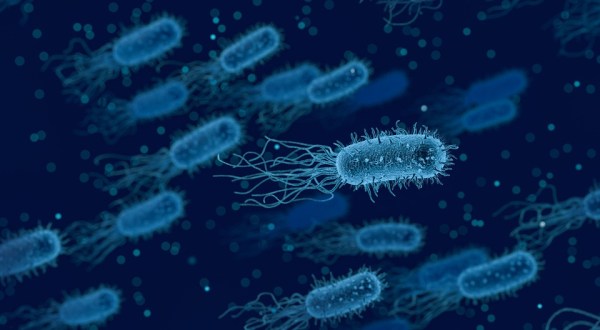
Reading time: 5 minutes Varshit Dusad Bacteria are our unallied neighbors, which depending upon circumstances chooses to be our friend or foe. While bacteria such as E.coli have often been the workhorses for molecular biology studies, they have other uses as well. Surprisingly, they have enormous potential for cancer therapy. No, I am not talking... Continue Reading →
Cancer and Vascular Permeability
Reading time: 5 minutes Yitong Li One of the biggest hurdles that stall new developments in cancer therapy is how to effectively deliver the treatment to the tumor. Most commonly, pharmaceutical agents and immunotherapies make their way to the tumor via the bloodstream. Hence, the successful emigration of these agents out of the blood vessels... Continue Reading →
Prolonging Life: The Power of Palliative Practices
Reading time: 3 minutes Nisitha Sengottuvel As cancer researchers and medical professionals, most of us at OncoBites have chosen to pursue a career fighting against cancer. Patients, however, have a fight that looks and feels a lot different than the fight we put forth every day in our labs. It is never easy and is... Continue Reading →
Weight during adolescence is associated with pancreatic cancer risk later in life
Reading time: 4 minutes Morgan McSweeney A recent study has found evidence that adolescents who are overweight or have obesity may be at a 407% increased risk of getting pancreatic cancer, the 6th most deadly form of cancer in the world. To determine this relationship, Levi et al. conducted a study of 1,087,358 Israeli Jewish... Continue Reading →
Players in Cancer Metastasis and Relapse
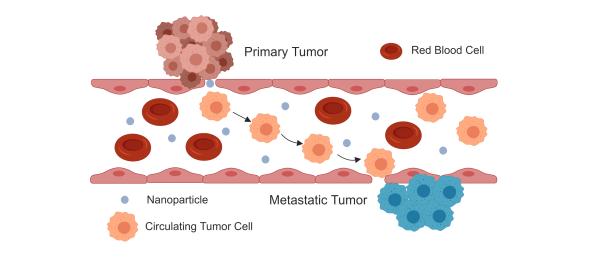
Reading time: 5 minutes Rachel Cherney Patients with metastatic cancer usually have a lower survival rate than patients without metastatic cancer, so it is important to understand how metastatis occurs, so we can learn how to improve patient survivability. Metastatic cancer makes up about 90% of cancer deaths. Cancer metastasis occurs when tumor cells break... Continue Reading →
Predicting the future: when cancer drugs only work for some patients
Reading time: 5 minutes Shaye Hagler The discovery of accelerators and brakes in our immune system in the early 1990s was fundamental to designing the cancer immunotherapy platforms we use today, which is why it won the 2018 Nobel Prize in Medicine or Physiology. Now, immune checkpoint inhibitors like anti-PD-1 can work in tandem with... Continue Reading →
Is Cancer Elimination Really a Mission Impossible?
Reading time: 4 minutes Jason Tetro Imagine a world in which cancer is no longer a threat to the world. Naturally, the task sounds unachievable. But much like Ethan Hunt and his Impossible Missions Force team, the Australian government has accepted this mission in the hopes of eliminating cervical cancer from the country. Now, a... Continue Reading →
Are humans immune to CRISPR/Cas9 gene editing?
Reading time: 4 minutes Morgan McSweeney CRISPR-Cas9 is the molecular gene editing system that has inspired hopes for a solution to genetic disease. By studying how bacteria use the CRISPR-Cas system to defend themselves against bacteriophages (viruses that infect bacteria), scientists have developed methods to use those same molecular scissors to cut out human genes... Continue Reading →
Double agents save the day?
Reading time: 6 minutes Manisit Das Sometimes double agents can be critical players in changing the course of conflicts, wars, and history. If you are a Potterhead like me, you are probably aware of how Professor Severus Snape played an important role in the wizarding world of Harry Potter. He instigated many of the major... Continue Reading →
When good cells go bad: White blood cells may aid in tumor recurrence
Reading time: 4 mins Sara Musetti “I lit up like a Christmas tree, Hazel Grace.” This line, from John Green’s bestselling novel The Fault in Our Stars, hits hard. A young teenage survivor of cancer has had a widespread relapse picked up in one of his many routine scans since going into remission years earlier.... Continue Reading →
Chlamydia, Ovarian Cancer, and the Arrested Immunity Conundrum
Taylor B. Poston Chlamydia is the most common sexually transmitted bacterial infection in the world, and 75% of infected women never develop symptoms. Furthermore, chlamydia will ascend from the cervix to the upper genital tract in 40% of infected women. This infection of the endometrium puts women at risk for pelvic inflammatory disease and infertility.... Continue Reading →
Hold the sugar: identifying the contributions of high blood glucose to poor cancer outcomes
Tamara Vital We’ve talked at Oncobites about how many factors can cause or contribute to cancer. We’ve discussed how tumors arise from cells that have acquired mutations (could be inherited). Many of these factors have been related to external exposures like UV exposure from the sun or cigarette smoking that cause mutations that contribute to... Continue Reading →
The Sweet Method of Cancer Detection
Kaye Alcedo Time is of the essence when it comes to the battle with cancer. Detecting tumors at an early stage increases the chance of patient survival to more than 80%. However, despite today’s advancing technology, about 48% of patients get diagnosed at a very late stage. This is because screening methods of many, if... Continue Reading →
A CAR-T therapy without the T-cells
Varshit Dusad Imagine a dystopian world. Here, some citizens of an otherwise well-functioning state have gone rogue and are running an anti-national agenda. They are always plundering the natural resources meant to be evenly distributed among the population. They are quite cunning as they start slowly by deviating from the laws of their natural order... Continue Reading →
Vaccines as Cancer Prevention and Therapies
Rachel Cherney Cancer is a complex set of diseases, characterized by uncontrolled growth and metastasis, destroying important organs and bodily systems. It can occur in almost any part of the body, and in most cases, it is impossible to determine how or when it will develop, certain genetically linked cancers perhaps being an exception. Because... Continue Reading →
Kadcyla: The Next Standard in Breast Cancer Therapy?
Taylor A. Johnson October is the official month of breast cancer awareness. Breast cancer is one of the most common forms of cancer, especially in women. Last year alone, the American Cancer Society estimated over 300,000 new cases of breast cancer would develop in men and women, and over 41,000 would pass away from breast... Continue Reading →
Diet-based measures can reduce the risk of cancer- fact or fake news?
Ananya Sen It has been widely proven that there is a correlation between weight and cancer. Being overweight increases the cancer risk 52-62% compared to people with a healthy weight because excess body fat causes an increase in hormones that promote tumor growth. This result begs the question- is there a link between diet and... Continue Reading →
The Reproducibility Crisis
Morgan McSweeney As Alex Woodell recently described, the preclinical research community is in a quiet crisis. Somewhere between 50% and 90% of results from early-stage academic cancer research are unable to be reproduced by industry scientists. Studies by several large multinational pharmaceutical companies and a number of other independent research groups have confirmed what they... Continue Reading →
Cancer Immunotherapy wins the 2018 Nobel Prize
Sara Musetti and Manisit Das Early October is an exciting time of the year when people all over the world turn their eyes to Stockholm to see the winners of the Nobel Prize. Yesterday, James Allison and Tasuku Honjo jointly won the 2018 Nobel Prize in Medicine or Physiology for their work discovering the function... Continue Reading →
Dealing With The Pitfalls of Checkpoint Security
Jason Tetro If you’ve ever traveled internationally, you know you need a passport. This document is your access pass to the world. What you might not know is that this rather plain looking document is filled with a variety of different checkpoints to ensure authenticity. Some passports have biometric chips, others have incorporated images only... Continue Reading →
Profiling the killer: Using gene sequencing to guide management in pancreatic cancer
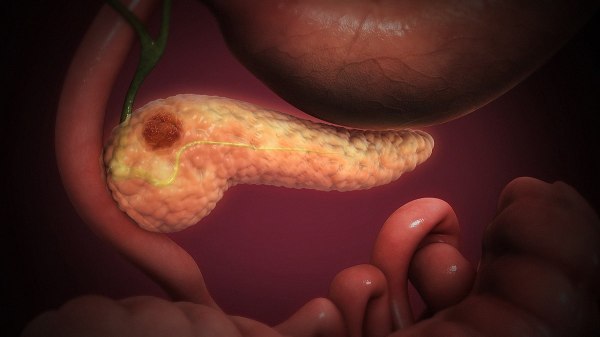
Manisit Das In earlier OncoBites articles, we discussed how genetic testing is increasingly used to guide cancer management. Cancer arises due to changes in our DNA sequences that make up our genes, which we refer to as gene mutations. By analyzing the genetic signatures within the tumor, clinicians can make better-informed choices to streamline the... Continue Reading →