Reading time: 3 minutes Morgan McSweeney Skin melanoma is the 5th most common type of cancer in the United States. Strikingly, 1 in 5 Americans develop skin cancer by the age of 70, and an average of 2 people die from skin cancer each hour. However, if detected while the tumor is still only present... Continue Reading →
Gene therapy vs Cancer: A promising yet challenging road
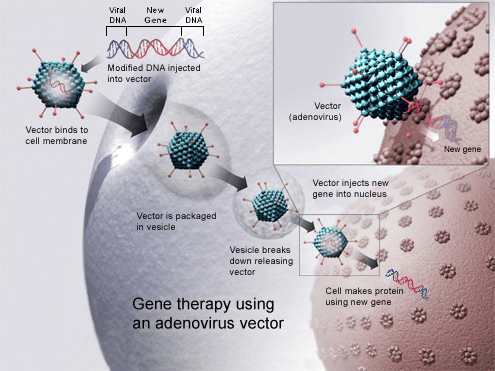
Reading time: 5 minutes Varshit Dusad Gene therapy has rapidly become one of the most promising new medical developments of our time. It has significant advantages over traditional therapies including the potential for one-time dosage instead of recurring treatment and higher specificity compared to traditional chemotherapy. Cancer is a genetic disease! It occurs when normal... Continue Reading →
Repurposing existing vaccines for cancer treatment
Reading time: 5 minutes Prathyusha Konda For the past decade, a growing area of cancer research has been focused on cancer immunotherapies. From the Nobel prize-winning checkpoint inhibitor therapy to cancer vaccines, the idea behind immunotherapies is to boost or activate the immune system. While the therapies being developed may be new, the idea behind... Continue Reading →
Cancer and CRISPR: A Promising Future
Reading Time: 4 minutes MaryAnn Bowyer Reading Time: 4 minutes It is a known fact that research into cancer treatment has become difficult due to the high specificity of causes behind tumor development. Indeed, it appears that for every step forward in terms of cancer treatment there is also a slight step backward. It is... Continue Reading →
Risk of Infection in Cancer Patients: Life in the Time of Coronavirus
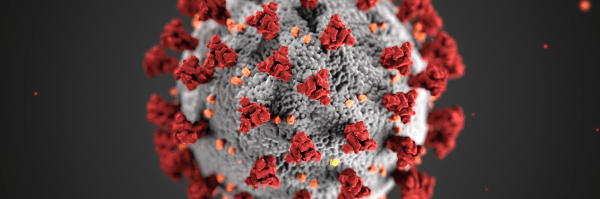
Reading time: 3 minutes Manisit Das It is a scary and anxious moment for many of us, and if you are on the internet, it is hard to miss updates about the latest coronavirus disease, COVID-19. The viral disease is characterized by flu-like symptoms and may cause respiratory infections in certain individuals, was declared a... Continue Reading →
Biology Guided Radiotherapy: technology to rapidly and precisely clear scattered tumors
Reading time: 3 minutes Michael Marand You may be familiar with the handy ‘Find My iPhone’ feature that comes with Apple cell phones. This feature uses radio waves from cell towers to direct you precisely to the spot where you dropped your device. Following similar principles, physicians can use imaging techniques to obtain signals from... Continue Reading →
A New Paradigm for Cancer Drug Development
Reading time: 4 minutes Brittany Avin McKelvey We are in a hayday for cancer therapies, as research has surpassed traditional chemotherapeutics. New drugs, new treatment regimens, and even new drug classes are approved each day, broadening the horizons of oncology. The newest types of drugs to recently gain FDA approval are tissue agnostic drugs. (See... Continue Reading →
Preventing cell death decreases breast cancer recurrence
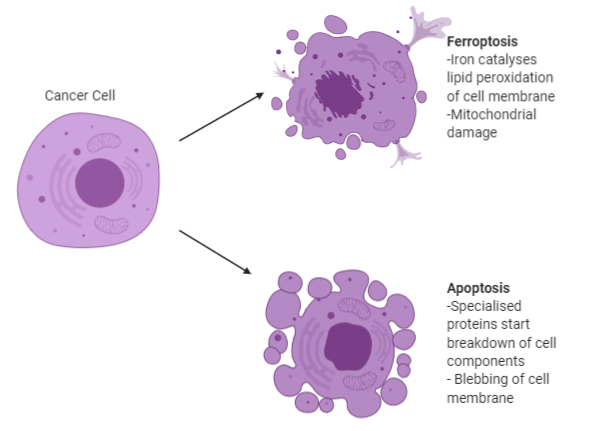
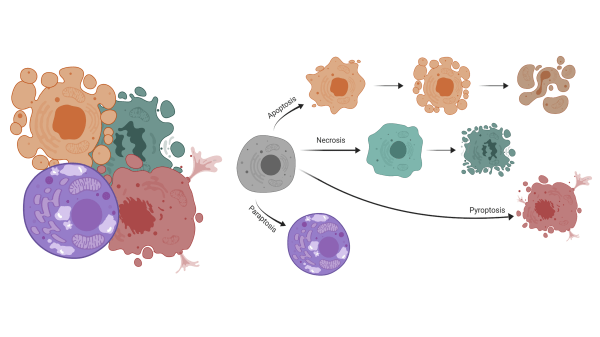
Reading time: 5 minutes Keighley Reisenauer Breast cancer is a collection of diseases, organized into subtypes designating which treatments may be best for the patient and how aggressive the cancer is likely to be. One thing that is universal across all subtypes, though, is what makes them worse: metastasis. When cancer metastasizes, it spreads across... Continue Reading →
Human Factors and Cancer Care
Reading time: 4 minutes Jordan E. Rogers, Andrew C. Griggs, Elizabeth H. Lazzara Research Engineering and Applied Collaborations in Healthcare (REACH) Lab Cancer is a prevalent disease that manifests drastically differently across individuals due to the interplay of multiple factors. Due to the disease’s multifaceted nature, the provision of safe, quality care within cancer is... Continue Reading →
Cancer Cell Metabolism: A Potential Therapeutic Target
Reading time: 5 minutes Aishwarya Subramanian The life cycle of cells is a key piece of our understanding of cancer; as cells grow, they divide and produce two new “daughter” cells. For the cells to divide, grow and survive, it requires energy which they gain by metabolising glucose. However, every healthy cell that divides has... Continue Reading →
Mitochondria: the Canary in the Coal Mine
Reading time: 3 minutes Alex S. Woodell The tale of the canary in the coal mine dates back to 1911, when British miners began carrying caged canaries with them underground as a means of detecting toxic gases. The idea of using canaries as an early indicator is credited to John Scott Haldane, a Scottish physiologist... Continue Reading →
How can we study cancer more accurately?
Reading time: 3 minutes Rachel Cherney If you have read other articles on Oncobites, you know that cancer is a collection of many diseases, and these diseases are complex. Cancer cells don’t live on their own; rather, they live among the normal tissue cells, immune cells, and bacteria in your body. Additionally, cancer cells can... Continue Reading →
The Power of Timing in Immunotherapy
Reading time: 3 minutes Natasha Vinod In 2018, the Nobel Prize in Physiology or Medicine was awarded to the inventors of immune checkpoint blockade therapy, a “game-changing” technology that initiated a paradigm shift in cancer management. Checkpoint blockade therapy works by unleashing the immune surveillance against cancer by blocking the “natural brakes” (checkpoints) in the... Continue Reading →
Words Matter
Reading time: 5 minutes Patty Spears When talking to, or about patients, words matter. Words can hurt and make patients feel blame or guilt about having cancer. It’s not usually done on purpose, so with increased awareness of what words mean to patients, everyone can be a bit more conscientious about what they say and... Continue Reading →
Cisplatin: a journey to a solution for triple-negative breast cancer
Tushar Date Estimated Reading time: 4 minutes Cisplatin is an old, platinum based anticancer drug that kills cancer cells by damaging their DNA. Its cytotoxic (cell-killing) properties were discovered by accident in the 1960s, when Barnett Rosenberg was performing experiments to analyse the effect of electric field on bacterial growth. He observed that bacterial proliferation... Continue Reading →
Bacterial Infection Is a Significant Cancer Risk Factor
Kedar Puvar Reading time: 3 minutes Much of the time, when scientists think of cancer-causing agents, they think of DNA damage. Indeed, some of the most infamous causes of cancer, such as excessive sunlight, tobacco smoke, or environmental pollutants, act by inducing mutations in key regions of our genes which can lead to effects such... Continue Reading →
Excess Adenosine: How Cancer Cells Use The Deaths of Their Neighbors to Protect Themselves
Reading time: 4 minutes Sara Musetti As fancy as the many cancer therapies on the market may seem, the underlying goal for all cancer medicines is the same: kill cancer cells. Chemotherapies damage the DNA of rapidly dividing cells enough that the cells die, immunotherapies train the immune system to kill cancer cells, radiation causes... Continue Reading →
Mind the Gap? Filling the gaps in understanding of nanoparticle entry into tumors
Reading time: 4 minutes Manisit Das Nanoparticles are tiny substances, about a hundred- to thousand-fold smaller than a typical cell, or about ten thousand-fold tinier than a grain of salt. In the past, we have discussed how nanoparticles are being investigated as carriers of drugs to tumors. These investigations were in part fueled by a... Continue Reading →
Shedding some blood for cancer cure
Reading time: 5 minutes Snehal Midge Breast cancer (BC) is the second highest cause of mortality worldwide. The standard clinical regimen for BC includes several modes of treatment such as chemotherapy, resection, radiotherapy, hormonal treatment, and receptor targeted therapy. Breast tumors often initially respond well to the combination of these strategies, allowing clinicians to proceed... Continue Reading →
Liquid Biopsy of Circulating Tumor HPV DNA
Reading time: 4 minutes Sabarish Srinivasan Introduction to Human Papillomavirus Human papillomavirus (HPV) is a small, circular double-stranded DNA virus, of which there are several strains. HPV infection is the most common sexually transmitted infection (STI) in the US. Unfortunately, this infection is difficult to identify, as it is asymptomatic in the majority of cases,... Continue Reading →
How liquid biopsies could help monitor cancer treatment
Reading time: 3 minutes Alejandra Canales Finding treatments for lung cancer is hard because, simply-put, cancerous cells are extremely stubborn, and patients with non-small cell lung cancer can often acquire resistance to a treatment regimen. Researchers have been exploring the feasibility of “liquid biopsies,” whereby a non-invasive blood sample could be used to obtain information... Continue Reading →
Trispecific Antibody- Another approach to cancer immunotherapy
Reading time: 4 minutes Aishwarya Subramanian At Oncobites we've covered the exciting emerging field of immunotherapy to treat cancer, some of which include PROTACs and BiTE molecules . Recently, significant advances have been made when trying to come up with cutting edge ideas for cancer treatment. With the recent changes in the landscape of cancer... Continue Reading →
How does a drug get approved?
Reading time: 5 minutes Bekah Schulz The Food and Drug Administration (FDA) is often criticized by patient advocacy groups for taking too much time to approve life-saving drugs. However, the FDA is a difficult situation; if they approve a drug too quickly and it turns out to be unsafe/ineffective, then people are upset. If they... Continue Reading →
Oncohistones and their role in pediatric cancers and other human cancers
Reading time: 5 minutes Jessica Desamero DNA is a two-stranded molecule that carries all our genetic information in the form of a code made up of four bases arranged in specific sequences. DNA has its own section of the cell, the nucleus, which serves to protect and contain it. As the cell divides and the... Continue Reading →
Understanding how monoclonal antibody therapies work in solid tumors
Reading time: 4 minutes Zoey Tang In the world of anticancer therapy, there are a lot of drugs that belong to a class of proteins called monoclonal antibodies (mAbs) These Y-shaped proteins can tightly hug other proteins- including disease targets on tumor cells- with both of their arms, making the tumor cells die. Moreover, unlike... Continue Reading →
The Double-Edged Sword of Collagen
Reading time: 4 minutes Sara Musetti If you’ve heard of collagen, it’s likely been in articles raving about its benefits. Maybe it was in the recent collagen broth craze, when everyone from Halle Berry to Dr. Oz claimed that the collagen in bone broth could prevent aging, improve your hair, cure arthritis, and so on.... Continue Reading →
Now You See Me: Boosting Tumor Antigen Expression to induce Anticancer Immunity
Reading time: 4 minutes Manisit Das From the early days of OncoBites, we are trying to share with you the reasons we get cancer. Cancer arises when the DNA in our cells is altered due to irreparable mistakes in the cellular machinery or environmental effects. If a mistake happens in the proteins that help repair... Continue Reading →
Paying for cancer care: a primer on the Oncology Care Model
Reading time: 4 minutes Swetha Srinivasan If you’ve been following the Democratic primary presidential debates, then you’re likely familiar with the spirited debate around the future of the healthcare system in the US, as well as the question: “How will we pay for it?” The world of health policy research has been evaluating on-the-ground solutions... Continue Reading →
Diet and Cancer
Reading time: 5 minutes Emily Bonacquisti With celebrity endorsements, social media, and your local personal trainers promoting the latest fad-diet, you’re probably hesitant to believe that any diet can do little more than shed the winter weight. However, behind the social media posts, there does exist significant amounts of science behind studying all types of... Continue Reading →
Gold Nanoparticles – The future of cancer diagnosis and therapy?
Reading time: 5 minutes Garima Khanna Figure 1: Gold Nanoparticles Gold nanoparticles (GNPs) possess exceptional characteristics, including high surface area to volume ratio, easy synthesis, surface chemistry, multi functionalization, stable nature and surface plasmon resonance. Because of these unique properties, they are emerging as a powerful tool for early tumor diagnosis and chemotherapeutic drug delivery... Continue Reading →