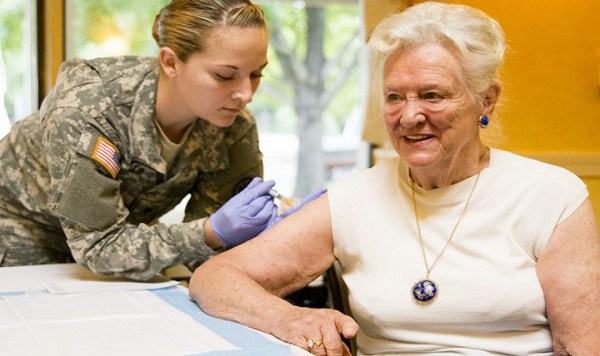
Reading time: 3 minutes Alejandra Canales Finding treatments for lung cancer is hard because, simply-put, cancerous cells are extremely stubborn, and patients with non-small cell lung cancer can often acquire resistance to a treatment regimen. Researchers have been exploring the feasibility of “liquid biopsies,” whereby a non-invasive blood sample could be used to obtain information... Continue Reading →
Oncohistones and their role in pediatric cancers and other human cancers
Reading time: 5 minutes Jessica Desamero DNA is a two-stranded molecule that carries all our genetic information in the form of a code made up of four bases arranged in specific sequences. DNA has its own section of the cell, the nucleus, which serves to protect and contain it. As the cell divides and the... Continue Reading →
PROTACs: Building better therapies
Reading time: 5 minutes Tamara Vital How do you stop an accident from happening? You could try to prevent the conditions that contribute to accidents by establishing rules that encourage and reward caution and safe behavior. On the road, licensing laws, traffic lights, and speed limits set the rules of the road, and those who... Continue Reading →
The Other EMT: Exploring the controversial driver of metastasis
Reading time: 5 minutes Keighley Reisenauer Google “EMT,” and you’re likely to see images of paramedics and ambulances. However, there is another EMT that plays a much different role in disease and illness. Epithelial to mesenchymal transition (EMT) is normally associated with processes such as wound healing and development. Cancer hijacks EMT to participate in... Continue Reading →
Finding a Cure to Aging and Cancer?
Reading Time: 4 minutes Daniel Zhong Imagine this scenario: You are 90 years old, with gray hair and wrinkled skin. You always carry around a walking cane everywhere you go because the slightest movements from sitting down on a chair to brushing your teeth in the morning cause you tremendous pain in your joints, muscles,... Continue Reading →
Making New Connections: Possible Cross-Talk Between Tumors and the Brain
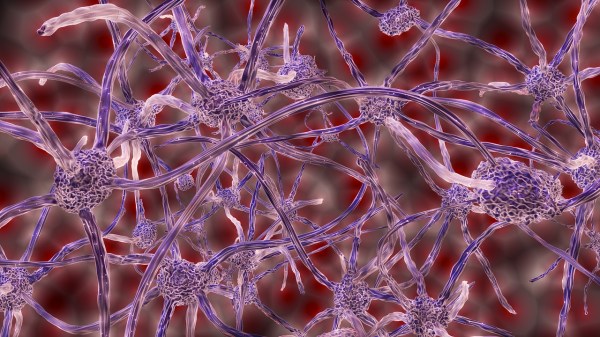
Reading time: 3 minutes Kaitlyn Felsheim The nervous system is integral for communication between the brain and the rest of the body. It is responsible for relaying messages to breathe, eat, feel, blink, and perform other vital tasks. Neurons play a huge role in tissue development and specification, and it turns out that cancer cells... Continue Reading →
Repurposing FDA approved drugs for cancer therapy
Reading time: 2 minutes Rachel Cherney *This article does not take the place of professional medical advice. Consult with your doctor* One of the most limiting aspects of drug development is the time it takes to design, optimize, and implement new drugs, which in turn limits patient treatment and survival. Unfortunately, for patients suffering from... Continue Reading →
Many Anticancer Targets Could Be A Mirage
Reading time: 4 minutes Kedar Puvar Designing new anticancer compounds is often a deliberate process, where the mechanism of action involves the blocking of a certain target, like a receptor or other cellular protein. Researchers would then optimize potential leads until a potent and effective drug is ready for clinical trials. This pipeline is considered... Continue Reading →
BiTE Molecules for Cancer Therapy
Reading time: 3 minutes Aishwarya Subramanian Cancer immunotherapy has gained a lot of traction in the last few years, as several novel therapeutics have made their way into the clinic. Among these new therapeutics, bispecific antibodies are some of the most unique. Unlike traditional antibodies, which have two arms that bind to the same molecule,... Continue Reading →
DNA G-Quadruplexes: Special Secondary Structures with Surprising Anticancer Implications
Reading time: 5 minutes Jessica Desamero From the start, our mission here at OncoBites has been to share the complicated nature of cancer with our readers and to shed light on breakthroughs in understanding and treating the disease. One of our biggest messages has been that “cancer” is really a family of different but related... Continue Reading →
Two New Cancer-Fighting Compounds, Brought to You by Mushrooms
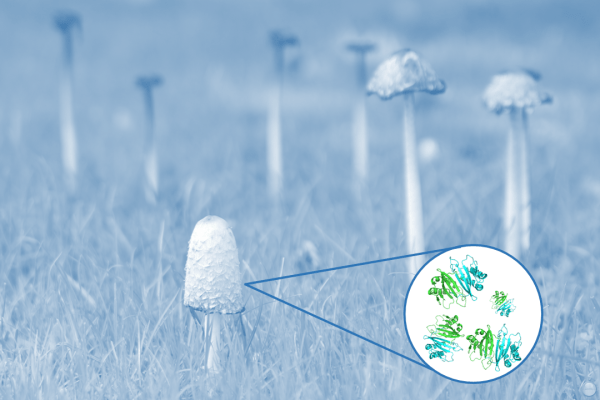
Reading time: 3 minutes Kedar Puvar At first glance, mushrooms, being immobile and nutritious, seem to be rather unassuming. Why, then, would you want to turn to mushrooms of all things as a source of new medicines? It turns out that they make up for their evolutionary weaknesses with a powerful toolbox of molecular defenses... Continue Reading →
The Rundown on Roundup: A Cancer-Causing Weedkiller?
Reading time: 4 minutes Ariana Cardillo If you’ve been to the Midwest, it’s hard to miss the endless fields dedicated to the agriculture industry. If you live there, you are accustomed to the growing cycles and crop rotations of the fields. You probably are even desensitized to the massive machinery used to maintain these crops.... Continue Reading →
Searching for the Switch: How Cancer Cells Become Drug-Resistant
Reading time: 4 minutes Sara Musetti Picture this: You walk into a strange room. Maybe you’re at a friend’s house, or the restroom in a new coffee shop, or a hotel room. It’s dark, and you can’t see, but no matter where you put your hand, you just can’t find the light switch. You know... Continue Reading →
The Rehabilitation of Thalidomide
Reading time: 4 minutes You may have heard of the infamous thalidomide, a morning sickness drug that was patented in the 1950s. Its potent anti-nausea effects made it ideal as a remedy for morning sickness in pregnant women and thalidomide was sold in over 40 countries, going as far as to be made available over... Continue Reading →
Evolution of chemotherapy: A look back in time
Reading time: 5 minutes Payal Yokota Chemotherapy (chemo) can be prescribed alone and in combination with other therapies such as surgery, radiation, and immunotherapies (ie. vaccines, checkpoint blockade, etc). Since its discovery, the chemo field has greatly advanced, both in its development and ability to treat cancers. While surgery and radiation act locally to remove... Continue Reading →
Too Much Potassium Might Be Poisoning Your Anti-Tumor Immunity
Reading time: 4 minutes Sara Musetti Cancer immunotherapy has been a very hot topic here at OncoBites (because it’s a hot topic right now among cancer researchers too), but let me be super clear ⎯ it is COMPLICATED. Your immune system is balanced extremely delicately to avoid sending you into shock each time you are... Continue Reading →
Going on the offense: PROTACs as cancer therapy
Reading time: 3 minutes Kedar Puvar Diseases are typically caused by defective or malicious proteins. Traditionally, treatments for these diseases use a strategy of inhibition - use a small molecule that can block the offending protein from carrying out its function and thereby, bring things back to normal. But what if we went one step... Continue Reading →
The Ubiquitin System and Why Researchers Are Targeting it for Cancer Therapy
Reading time: 4 minutes Kedar Puvar Cancerous cells by definition are constantly growing and multiplying and therefore have devised ways to sustain that growth. If one wishes to create a brand new therapeutic against cancer, it’s necessary to identify molecular mechanisms that cancer cells use to grow, then attempt to shut down that mechanism with... Continue Reading →
The Many Faces of Tumor Scavenging
Reading time: 8 minutes Alex S. Woodell Prologue The tumor microenvironment (TME) is a desolate place. Nutrients are sparse, and living conditions are hostile for the resident cells. This poorly perfused, alien landscape is filled with leaky, tortuous vessels. The interstitial fluid pressure is high, severely compromising nutrient delivery mechanisms. It’s not a place... Continue Reading →
Bacteria in Cancer therapy: Friend or Foe?
Reading time: 5 minutes Varshit Dusad Bacteria are our unallied neighbors, which depending upon circumstances chooses to be our friend or foe. While bacteria such as E.coli have often been the workhorses for molecular biology studies, they have other uses as well. Surprisingly, they have enormous potential for cancer therapy. No, I am not talking... Continue Reading →
Players in Cancer Metastasis and Relapse
Reading time: 5 minutes Rachel Cherney Patients with metastatic cancer usually have a lower survival rate than patients without metastatic cancer, so it is important to understand how metastatis occurs, so we can learn how to improve patient survivability. Metastatic cancer makes up about 90% of cancer deaths. Cancer metastasis occurs when tumor cells break... Continue Reading →
When good cells go bad: White blood cells may aid in tumor recurrence
Reading time: 4 mins Sara Musetti “I lit up like a Christmas tree, Hazel Grace.” This line, from John Green’s bestselling novel The Fault in Our Stars, hits hard. A young teenage survivor of cancer has had a widespread relapse picked up in one of his many routine scans since going into remission years earlier.... Continue Reading →
Hold the sugar: identifying the contributions of high blood glucose to poor cancer outcomes
Tamara Vital We’ve talked at Oncobites about how many factors can cause or contribute to cancer. We’ve discussed how tumors arise from cells that have acquired mutations (could be inherited). Many of these factors have been related to external exposures like UV exposure from the sun or cigarette smoking that cause mutations that contribute to... Continue Reading →
The Sweet Method of Cancer Detection
Kaye Alcedo Time is of the essence when it comes to the battle with cancer. Detecting tumors at an early stage increases the chance of patient survival to more than 80%. However, despite today’s advancing technology, about 48% of patients get diagnosed at a very late stage. This is because screening methods of many, if... Continue Reading →
A CAR-T therapy without the T-cells
Varshit Dusad Imagine a dystopian world. Here, some citizens of an otherwise well-functioning state have gone rogue and are running an anti-national agenda. They are always plundering the natural resources meant to be evenly distributed among the population. They are quite cunning as they start slowly by deviating from the laws of their natural order... Continue Reading →
When math meets lab: The power of modeling in cancer biology
Varshit Dusad 'All models are wrong, some are useful!' - George Box The advancement of biological research relies on understanding how the different moving parts interact with each other, forming an integrated system. To better understand a system we often resort to models which help us develop a logical framework of these interactions, offering us... Continue Reading →
Putting tumor cells to sleep
Yitong Li How to treat cancers has always been one of the biggest challenges in modern medical practice. While current chemotherapies and radiotherapies have shown significant progress, not all patients survive treatment, and only a portion of those who survive do so without suffering from significant trauma. Hence, early diagnosis and safer treatments are the... Continue Reading →
The Reproducibility Project
Alex S. Woodell As members of the biomedical research community, we are all familiar with the basic structure of the scientific method. We make an observation that identifies a problem, form a hypothesis based on known information, perform experiments to test this hypothesis, then draw conclusions that drive future research. However, there is a fifth... Continue Reading →