Reading time: 3 minutes Kedar Puvar Diseases are typically caused by defective or malicious proteins. Traditionally, treatments for these diseases use a strategy of inhibition - use a small molecule that can block the offending protein from carrying out its function and thereby, bring things back to normal. But what if we went one step... Continue Reading →
Human Organ on a Chip: A Better Model for Drug Development?
Reading time: 5 minutes Kaye Alcedo Even before President Nixon’s declaration of the “war on cancer” in 1971, the journey towards a cure was nothing but a rollercoaster ride. Many promising cancer drugs are tested in human clinical trials but ultimately fail primarily because they demonstrate inadequate efficacy or safety, costing billions of dollars, increasing... Continue Reading →
Can exercise prevent cancer recurrence?
Reading time: 3 minutes Bekah Schulz It is well accepted that exercise is beneficial for human health and boosts overall energy level. However, the questions remains: can exercise be used as a cancer therapy? Research is indicating that it can. Over the past 20 years, studies have demonstrated that exercise decreases the risk of recurrence... Continue Reading →
Towards Personalized Cancer Medicine for All
Reading time: 6 minutes Rachel Cherney Modern medicine has saved millions of lives, but with a little improvement, it could save even more. Our current medical practices rely on medical professionals reacting to a diagnosis, treating patients after they may be or already are ill. We are increasingly recognizing the necessity of being proactive in... Continue Reading →
Overcoming the Limitations of CAR-T Therapy: Burnout
Reading time: 4 minutes Alex S. Woodell Marathon runners are an interesting breed. In order to complete the grueling 26.2 mile circuit, they must push their mental and physical boundaries to the limit. Seasoned runners possess great strength, focus, resilience, and determination. Each of these qualities is a testament to the intense training schedules they... Continue Reading →
Maternal Cancer and its Impact on Infants
Reading time: 4 minutes Varshit Dusad Cancer by no stretch of the imagination is a rare disease. It affects a significant population worldwide, and every year millions of dollar are spent investigating the causes of cancer and searching for a potential cure. However, a rarely discussed topic is the adverse impact on the health of... Continue Reading →
Robots are coming for your job (if you are a radiologist)
Reading time: 4 minutes Morgan McSweeney What can humans do better than robots? For most of history, the answer to that question has been.. everything. However, the balance of power is rapidly shifting away from warm, fleshy, humans toward cold, calculating, processing power. Did you know that a few years ago, an artificial intelligence (AI)... Continue Reading →
Estrogen on the Brain: How Hormones Might Be Increasing Brain Metastasis
Reading time: 3 minutes Sara Musetti One of the realities of cancer is that the primary tumor is rarely the cause of issues; usually, mortality and complications come from tumor cells spreading throughout the body and forming new tumors, a process called metastasis. For most cancers, the primary tumor can be surgically removed, but once... Continue Reading →
The Ubiquitin System and Why Researchers Are Targeting it for Cancer Therapy
Reading time: 4 minutes Kedar Puvar Cancerous cells by definition are constantly growing and multiplying and therefore have devised ways to sustain that growth. If one wishes to create a brand new therapeutic against cancer, it’s necessary to identify molecular mechanisms that cancer cells use to grow, then attempt to shut down that mechanism with... Continue Reading →
Falling through the gaps: Do nanoparticles enable cancer cells to escape through leaky vessels?
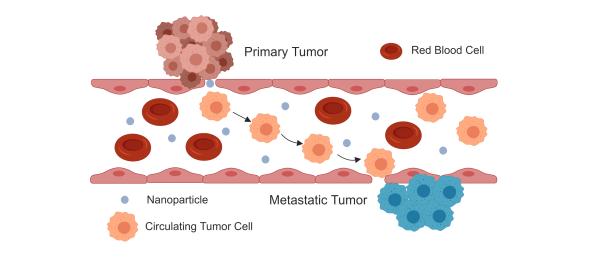
Reading time: 3 minutes Manisit Das Previously at Oncobites, we discussed how small particles such as nanoparticles could be used for delivering drugs against cancer. The nanoparticles can carry the drugs to the tumor taking advantage of the leakiness of blood vessels running through the tumor. The leaky vessels allow the drug-carrying nanoparticles to enter... Continue Reading →
The Cardiac-Cancer Connection
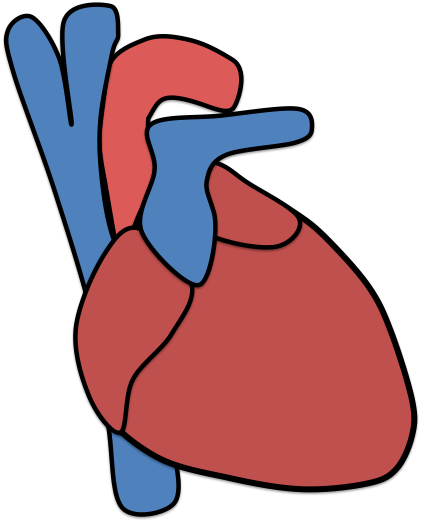
Reading time: 3 minutes Taylor A. Johnson February is Heart Month, wherein various organizations such as the American Heart Association and the National Institute of Health raise heart health awareness and promote practices that can lower heart disease or cardiovascular disease (CVD) development. CVD and cancer are unfortunately two of the primary causes of death... Continue Reading →
Participating in a cancer clinical trial: a path rife with difficulties
Reading time: 4 minutes Swetha Srinivasan Cancer therapies, like all other medicines, only make their way to patients after the completion of a lengthy process of extensive research studies involving animals and then people to make sure that the benefits of the drug outweigh the risks. These final research studies in people are commonly known... Continue Reading →
Sneaking into the non-conventional niches: Using gamma delta T cells to fight cancer
Reading time: 6 minutes Payal Yokota Despite the advent and access to a variety of targeted immunotherapy approaches, the current paradigm for solid tumors still remains if you can cut it out – you do! Depending on the grade of tumor and degree of metastasis, there’s a substantial risk of tumor resurgence. In those cases,... Continue Reading →
The link between cleanliness and childhood cancer
Taylor B. Poston Childhood acute leukemia is the most common pediatric cancer in the developed world. It accounts for one-third of all cases and affects 1 in 2000 children under the age of 15. More specifically, acute lymphoblastic leukemia (ALL) is the most common pediatric leukemia and case numbers have been increasing steadily at 1%... Continue Reading →
Recombinant cytokines: The original cancer immunotherapy
Reading time: 4 minutes Bekah Schulz Many people are excited about checkpoint inhibitors in cancer immunotherapy. In fact, the 2018 Nobel Prize in medicine was awarded for the development of two checkpoint inhibitors PD-1/L1 (Opdivo/Keytruda) and CTLA-4 (Yervoy). However, cancer immunotherapy is not a new concept. In fact, in 1986, recombinant interferon (IFN) alpha was... Continue Reading →
The Cancer Genome Atlas: A Roadmap for Cancer Research
Reading time: 3 minutes Rachel Cherney At Oncobites, we write about current and cutting edge cancer research and how various lifestyles may affect cancer risk. However, we don’t often talk about the types of data that are generated from cancer research or how they can be used. Large informative data sets can be used to... Continue Reading →
An Aspirin a Day Keeps Cancer Away
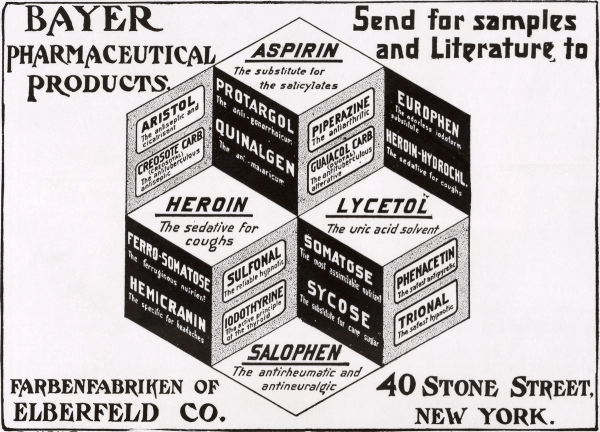
Reading time: 5 minutes Alex S. Woodell Most of us have taken acetylsalicylic acid at some point in our lives. This popular drug was first brought to market in 1899 by Bayer who coined the brand name Aspirin. Aspirin belongs to a class of drugs known as nonsteroidal anti-inflammatory drugs (NSAIDs) which are used to... Continue Reading →
Isotopic labeling: A peek inside cancer cells
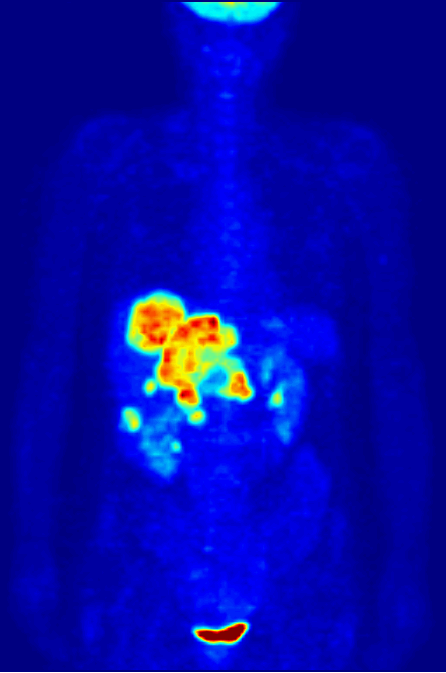
Reading time: 4 minutes Varshit Dusad Studying the growth of the tumor is very important to devise an effective treatment against cancer. Often cancer tissues are buried deep inside the body and we need diagnostic methods that can tell us about their progression accurately without harming the body while not losing the accuracy. Therefore, invasive... Continue Reading →
Reducing chemo side effects by soaking up excess drug
Reading time: 4 minutes Morgan McSweeney A research team from UC Berkeley, UCSF, and UNC Chapel Hill has developed a new strategy to prevent unwanted side effects of toxic chemotherapy drugs. Often, choosing a dose of chemotherapy has to be balanced between how effective it will be at killing tumor cells and how toxic it... Continue Reading →
Physical Education: The Anatomy of a Tumor
Reading time: 4 minutes Shaye Hagler Last spring, Sara introduced some of the ways tumors avoid being killed by both our own bodies’ defenses and the various treatments we throw at them; if you’ve kept up since then, you’ve read a lot about cancer biology and a tumor’s ability to send out signals to other cells... Continue Reading →
Surviving breast cancer: it’s not over even when it’s over
Reading time: 4 minutes Swetha Srinivasan “Congratulations, you are cancer free!” Hearing these words from the oncologist must come as an overwhelming relief to patients, as surviving a cancer diagnosis is one of the hardest things a person can do over their lifetime. Yet, beating cancer changes a person profoundly, and for many, the end... Continue Reading →
Biological Sex and Brain Cancer
Reading time: 5 minutes Sara Musetti If someone were to ask you whether biological sex is related to the risk of cancer, you would might say yes--cis men can suffer from prostate and testicular cancer while cis women may suffer from cervical and ovarian cancer (and are at higher risk of breast cancer). Those all... Continue Reading →
Patterns in combat: Using old cues in the battle against cancer
Reading time: 5 minutes Manisit Das As humans, we are naturally programmed to recognize patterns. They help us detect cues in our surroundings and aid our decision making. We associate camouflage patterns with battle dress, assortments of red and green with the holidays; these recognition events help us to put things in boxes in our... Continue Reading →
Looking back: A note from Team Oncobites
So do we have a cure for cancer anytime soon? A question that every cancer researcher has probably faced multiple times in social situations. Cancer touches most of our lives, in one way or another. As cancer researchers, we consider it a privilege to be able to study the menacing disease that we are far... Continue Reading →
The Many Faces of Tumor Scavenging
Reading time: 8 minutes Alex S. Woodell Prologue The tumor microenvironment (TME) is a desolate place. Nutrients are sparse, and living conditions are hostile for the resident cells. This poorly perfused, alien landscape is filled with leaky, tortuous vessels. The interstitial fluid pressure is high, severely compromising nutrient delivery mechanisms. It’s not a place... Continue Reading →
Bacteria in Cancer therapy: Friend or Foe?
Reading time: 5 minutes Varshit Dusad Bacteria are our unallied neighbors, which depending upon circumstances chooses to be our friend or foe. While bacteria such as E.coli have often been the workhorses for molecular biology studies, they have other uses as well. Surprisingly, they have enormous potential for cancer therapy. No, I am not talking... Continue Reading →
Cancer and Vascular Permeability
Reading time: 5 minutes Yitong Li One of the biggest hurdles that stall new developments in cancer therapy is how to effectively deliver the treatment to the tumor. Most commonly, pharmaceutical agents and immunotherapies make their way to the tumor via the bloodstream. Hence, the successful emigration of these agents out of the blood vessels... Continue Reading →
Prolonging Life: The Power of Palliative Practices
Reading time: 3 minutes Nisitha Sengottuvel As cancer researchers and medical professionals, most of us at OncoBites have chosen to pursue a career fighting against cancer. Patients, however, have a fight that looks and feels a lot different than the fight we put forth every day in our labs. It is never easy and is... Continue Reading →
Weight during adolescence is associated with pancreatic cancer risk later in life
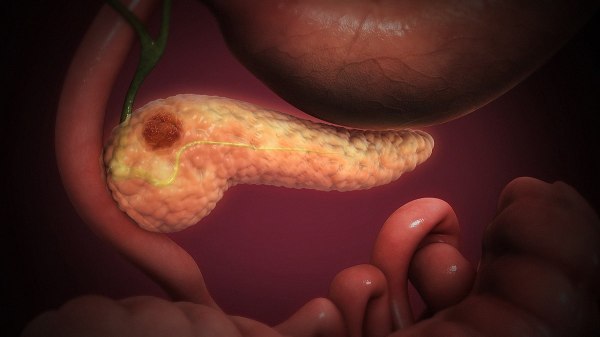
Reading time: 4 minutes Morgan McSweeney A recent study has found evidence that adolescents who are overweight or have obesity may be at a 407% increased risk of getting pancreatic cancer, the 6th most deadly form of cancer in the world. To determine this relationship, Levi et al. conducted a study of 1,087,358 Israeli Jewish... Continue Reading →
Players in Cancer Metastasis and Relapse
Reading time: 5 minutes Rachel Cherney Patients with metastatic cancer usually have a lower survival rate than patients without metastatic cancer, so it is important to understand how metastatis occurs, so we can learn how to improve patient survivability. Metastatic cancer makes up about 90% of cancer deaths. Cancer metastasis occurs when tumor cells break... Continue Reading →