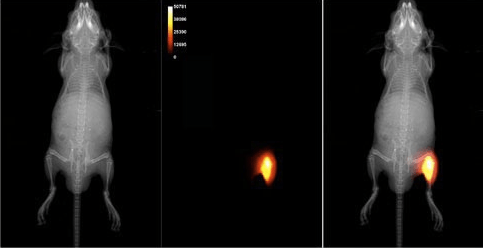
Keyword: Preclinical oncology imaging Reading time: 6 minutes Bethany Cooper Introduction With almost 10 million deaths from cancer in 2020, it is the leading cause of death globally, accounting for nearly one in every six deaths. Given the scale and burden of disease, it is no surprise that oncology trials make up a significant proportion... Continue Reading →
Targeting the undruggable: Updates in KRAS directed therapies
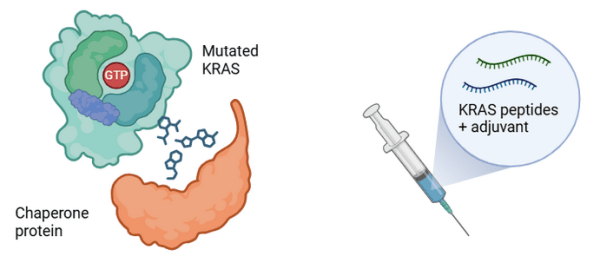
Reading time: 5 minutes Chris Wang Since its discovery in 1982, therapies targeting the mutated KRAS oncogene have long eluded cancer researchers. KRAS has been considered an undruggable target for decades due to lack of a binding pocket where a drug could fit.1 However, the need for KRAS targeting therapies is severely needed as KRAS... Continue Reading →
Newly approved combination treatment available for solid tumors!
Reading time: 6 minutes Brittane L. Strahan MSN, RN, CCRP The treatment of solid tumors is evolving constantly and rapidly in the vast oncology clinical research landscape. Though huge strides have been made in the treatment of even difficult tumor types (such as small cell lung cancer), there is still much work left to do.... Continue Reading →
Metastatic Colorectal Cancer with BRAF V600E Mutation Gains New FDA Approval
Reading time: 4 minutes Aishat Motolani Cetuximab, Panitumumab, Tucatinib, and Ipilimumab, just to name a few, are examples of drugs approved for metastatic colorectal cancer (mCRC) over the past two decades. However, due to the poor outcomes of some of these drugs in mCRC patients, researchers are exploring new treatment combinations to optimize efficacy. This... Continue Reading →
Vorasidenib: A case study in bench-to-bedside translational research
Reading time: 6 minutes Spencer Maingi Identifying IDH mutations and their function In 2008, researchers studying brain tumors discovered something surprising. Patients with “secondary glioblastoma”, a uniformly lethal cancer that arises from a prior, less aggressive brain tumor (“low-grade glioma”), frequently had mutations in their tumor in the gene isocitrate dehydrogenase 1 (IDH1).1 Even more... Continue Reading →
Micro-Hydrogels: Injecting New Ideas into CAR T-Cell Therapy
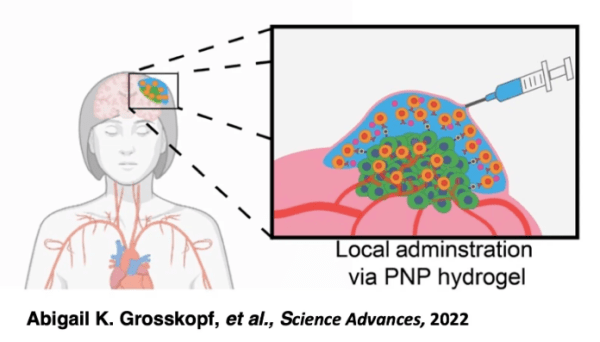
Reading time: 8 minutes Alex DeWalle At the core of translational oncology lies a fundamental problem: how do we kill tumor cells without harming healthy tissue? Novel therapies must directly target tumor cells to achieve this goal in a way that traditional chemotherapies cannot. CAR T-cell therapy (CAR T) is one of the most promising... Continue Reading →
Extracellular Vesicles in Cancer
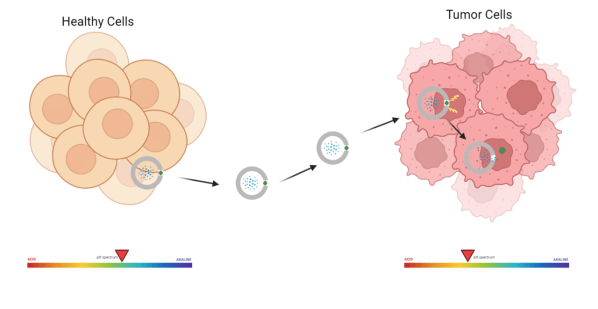
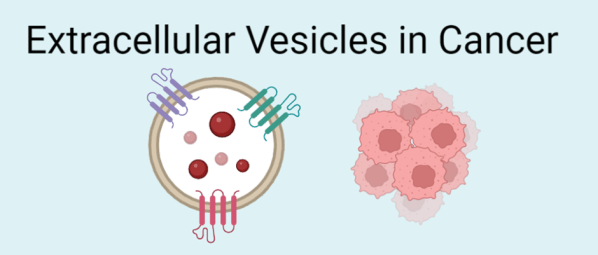
Reading time: 5 minutes Charlotte Boyd Extracellular vesicles (EVs) are small bubbles which are released from the cell. Cells produce multiple types of EVs which are different sizes ranging from approximately 30 nanometres to 10,000 nanometres. A nanometre is 10 million times smaller than a centimeter. This means that EVs are tiny and not visible... Continue Reading →
Patient-Derived Xenograft Models: Bridging the Gap Between Pre-clinical and Clinical Research
Reading time: 6 minutes Karli Norville It can take more than ten years to move a drug or therapeutic from discovery to FDA approval. Despite the years of research put in before a clinical trial begins, many therapeutics fail due to unforeseen safety complications or their lack of efficacy. Why do so many fail? Despite... Continue Reading →
Phototherapy and its potential in cancer treatment
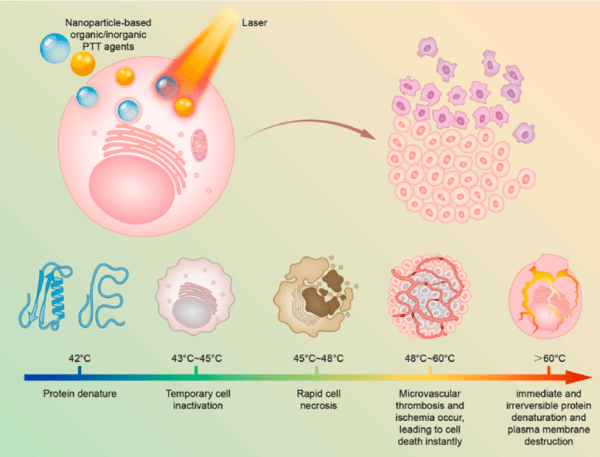
Reading time: 5 minutes Muhammad Ayhan Murtaza The word phototherapy comes from two words, “photo” and “therapy” which, evidently so, means “medical treatment using light”. The word has its roots in the older Greek language, but much like this old language, cancer is by no means a newer predicament. In fact, it actually predates human... Continue Reading →
Cancer vs. Targeted Agents: A Molecular Arms Race
Reading time: 4 minutes Mia Hubert Chronic myelogenous leukemia (CML) is a slow-progressing disease resulting from an overproduction of blood cells originating from the bone marrow, known as myeloid cells. Before 2001, the standard of care included chemotherapy and bone marrow transplantation (BMT). Unfortunately, chemotherapeutic approaches were non-curative and BMT entailed a high-risk procedure with... Continue Reading →
Anti-Angiogenic Cancer Treatments
Reading time: 5 minutes Aya Elmeligy Angiogenesis is the formation of blood vessels within the body to provide oxygen and nutrients to tissues. Tumors will hijack this process to allow for continued growth and metastasis by forming their own vascular system. Microvessel density within a tumor is often used as a prognosis tool, as the... Continue Reading →
Self-destructive Cancer: Tricking Tumors Into Targeting Themselves
Reading time: 3 minutes Aya Elmeligy When you think of cancer treatment you might think of aggressive chemotherapy, intense radiation, and endless drugs which all carry the risk of damaging healthy cells in addition to the cancerous ones. But ultimately, it is all worth it to hear the words “You are cancer free!”. But what... Continue Reading →
Tumor-on-a-chip: A Better Method for Drug Discovery?
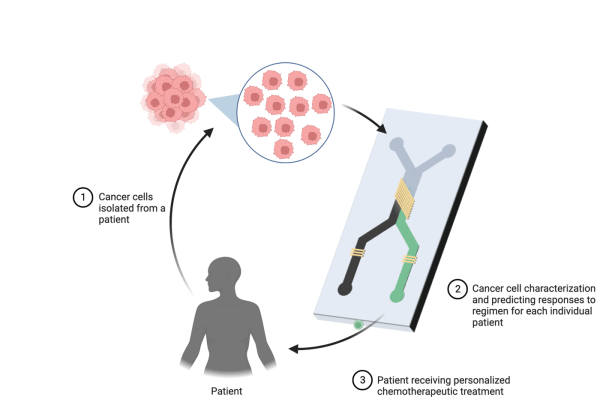
Reading time: 7 minutes Nayela Chowdhury Conventional 2D and 3D models of cancer have widely been utilized in pre-clinical drug development; however, neither of the platforms mimics the dynamic interactions that occur in living tumors. In vivo studies (for example, in small animal models) have been central in translational cancer research and have contributed largely... Continue Reading →
3D Screening of Compounds for Cancer Therapy
Reading time: 4 minutes Sydney Scatigno Over the last couple of decades, cancer research has made strides in improving the pre-clinical assessment of novel compounds. Compound screening, the process of assessing new compounds for efficacy, across various cell lines is an important step in finding the optimal drug candidate downstream in the drug development process.... Continue Reading →
Artificial Intelligence: A Threat to Us or to Cancer?
Reading time: 5 minutes Aya Elmeligy Introduction Cancer is a constantly evolving illness. This infamous disease crosses everyone’s mind, whether through fear of developing it or worry of never being rid of it. The key to overcoming this is early diagnosis and more effective treatments that are personalized to the patient. Literature regarding the average... Continue Reading →
Why do we need mice models in the study of cancer?
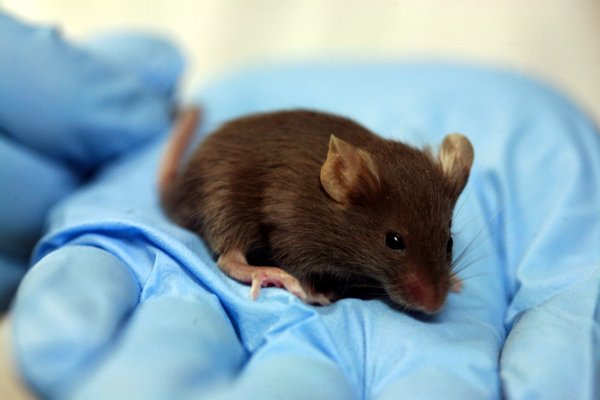
Namrata Nilavar Reading time: 5 minutes During the COVID-19 pandemic, many researchers have ‘simulated’ the progression of the pandemic, which often involves researchers using a computer program that allows them to understand how the pandemic might pan out. These programs can help us predict ‘real-world’ scenarios. Similarly, we can simulate or imitate the progression of... Continue Reading →
Old weapon for a new battle: Repurposing existing market drugs for cancer treatment
Reading time: 5 minutes “It cannot get any better with our three-in-one device…buy one get one free today,” sings my radio as I commute to the lab daily. I nod in agreement to such commercials because I love to do more with less. Currently, many products are often rebranded as multi-purposed because products and services... Continue Reading →
Immune Agonist Antibodies: Promising Immunotherapy Targets on the Horizon
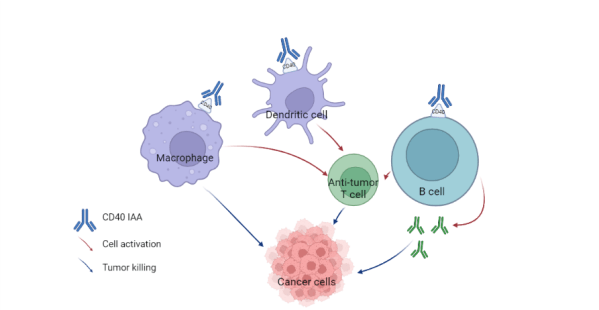
Reading time: 4 minutes Kate Secombe You may have read previously on OncoBites about immunotherapies, and the great promise they hold in treating a wide range of cancers. Commonly used immunotherapies include checkpoint inhibitors such as PD-1 or CTLA-4 inhibitors. Here I will be looking at an emerging subset of immunotherapies known as immune agonist... Continue Reading →
Unlocking Nature’s Cancer Therapies
Reading time: 2 minutes Rachel Cherney Nature is magnificent, simply put. It is indispensable, diverse, and more complex than we currently understand. Its diversity ranges from from the Mantis Shrimp, which can see millions of colors as compared to humans, to the Axolotl, which has the remarkable ability to regenerative any of the limbs. However,... Continue Reading →
AlphaFold: A game changer in cancer?
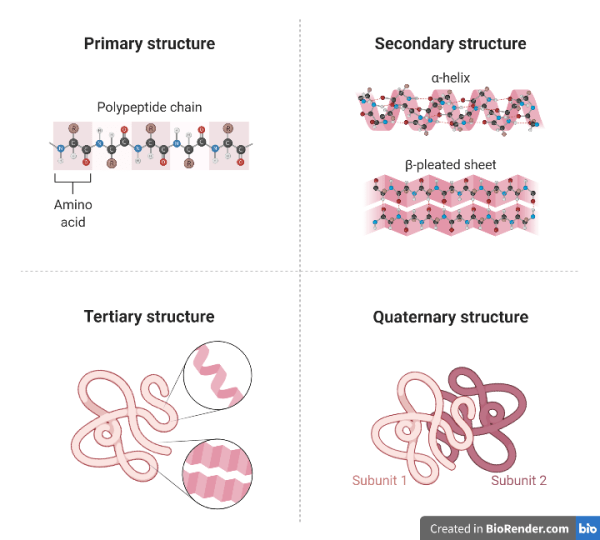
Reading time: 4 minutes Chamath Chandrasekera Proteins are the molecular machines that perform nearly every bodily function including contracting muscles, digesting food, and healing wounds. They also provide structural support by reinforcing the shape of cells and tissues. So how do proteins go from a string of amino acids to a 3D structure with a... Continue Reading →
CDK4/6 Kinase Inhibitors: Limiting Chemotherapy Toxicity
Reading time: 5 minutes Chris Wang Chemotherapy is a mainstay of cancer treatment, yet many times it is temporarily withheld or stopped due to significant toxicity. This is because chemotherapy drugs cannot differentiate between killing cancer cells and killing fast growing healthy cells, such as cells in your bone marrow. These cells divide quickly because... Continue Reading →
Why Cancer is Hard to Treat
Reading time: 4 minutes Daniel Zhong Before we believe headlines proclaiming “Cancer is cured”, it is crucial to understand that developing a therapy that universally cures all cancers is highly unrealistic as our knowledge surrounding mechanisms of cancer progression advances. While we do have non-curative treatments for some types of cancer such as chemotherapy and... Continue Reading →
A New Paradigm for Cancer Drug Development
Reading time: 4 minutes Brittany Avin McKelvey We are in a hayday for cancer therapies, as research has surpassed traditional chemotherapeutics. New drugs, new treatment regimens, and even new drug classes are approved each day, broadening the horizons of oncology. The newest types of drugs to recently gain FDA approval are tissue agnostic drugs. (See... Continue Reading →
Cancer Cell Metabolism: A Potential Therapeutic Target
Reading time: 5 minutes Aishwarya Subramanian The life cycle of cells is a key piece of our understanding of cancer; as cells grow, they divide and produce two new “daughter” cells. For the cells to divide, grow and survive, it requires energy which they gain by metabolising glucose. However, every healthy cell that divides has... Continue Reading →
How does a drug get approved?
Reading time: 5 minutes Bekah Schulz The Food and Drug Administration (FDA) is often criticized by patient advocacy groups for taking too much time to approve life-saving drugs. However, the FDA is a difficult situation; if they approve a drug too quickly and it turns out to be unsafe/ineffective, then people are upset. If they... Continue Reading →
Many Anticancer Targets Could Be A Mirage
Reading time: 4 minutes Kedar Puvar Designing new anticancer compounds is often a deliberate process, where the mechanism of action involves the blocking of a certain target, like a receptor or other cellular protein. Researchers would then optimize potential leads until a potent and effective drug is ready for clinical trials. This pipeline is considered... Continue Reading →
DNA G-Quadruplexes: Special Secondary Structures with Surprising Anticancer Implications
Reading time: 5 minutes Jessica Desamero From the start, our mission here at OncoBites has been to share the complicated nature of cancer with our readers and to shed light on breakthroughs in understanding and treating the disease. One of our biggest messages has been that “cancer” is really a family of different but related... Continue Reading →
Two New Cancer-Fighting Compounds, Brought to You by Mushrooms
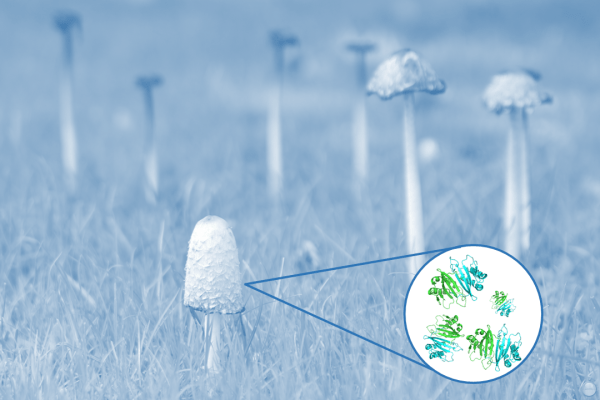
Reading time: 3 minutes Kedar Puvar At first glance, mushrooms, being immobile and nutritious, seem to be rather unassuming. Why, then, would you want to turn to mushrooms of all things as a source of new medicines? It turns out that they make up for their evolutionary weaknesses with a powerful toolbox of molecular defenses... Continue Reading →
Going on the offense: PROTACs as cancer therapy
Reading time: 3 minutes Kedar Puvar Diseases are typically caused by defective or malicious proteins. Traditionally, treatments for these diseases use a strategy of inhibition - use a small molecule that can block the offending protein from carrying out its function and thereby, bring things back to normal. But what if we went one step... Continue Reading →
Human Organ on a Chip: A Better Model for Drug Development?
Reading time: 5 minutes Kaye Alcedo Even before President Nixon’s declaration of the “war on cancer” in 1971, the journey towards a cure was nothing but a rollercoaster ride. Many promising cancer drugs are tested in human clinical trials but ultimately fail primarily because they demonstrate inadequate efficacy or safety, costing billions of dollars, increasing... Continue Reading →