Reading time: 7 minutes Sakshi Dhavale Did you know that pancreatic cancer has the highest mortality rate among all the major cancers? Because of this, researchers are rigorously working to find a cure for this deadly cancer type. Pancreatic Ductal Adenocarcinoma (PDAC) is the most common type of pancreatic cancer and is highly lethal due... Continue Reading →
Democratizing Gene Therapy Through Viruses
Reading time: 5 minutes Kelsey Woodruff Hematopoietic stem cells (HSCs) are a rare population of cells that have the capacity to differentiate into one of the many types of blood cells that keep your body healthy. Through a complex series of signaling events and carefully timed cell divisions, these cells repopulate the entire blood compartment.... Continue Reading →
Unlocking the Secrets of Pancreatic Cancer: How Super Enhancers and RNA-Binding Proteins Illuminate New Paths to Treatment
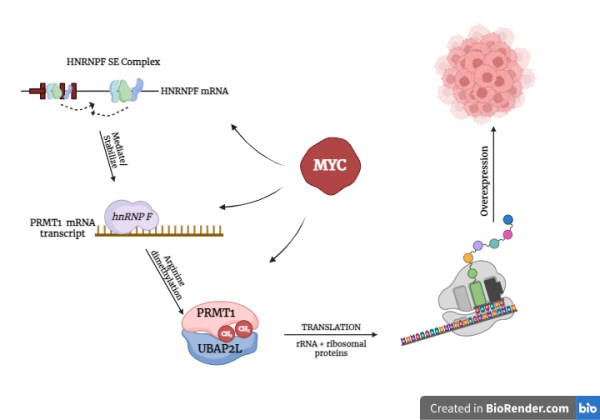
Reading time: 7 minutes Sakshi Dhavale Did you know that pancreatic cancer has the highest mortality rate among all the major cancers? Because of this, researchers are rigorously working to find a cure for this deadly cancer type. Pancreatic Ductal Adenocarcinoma (PDAC) is the most common type of pancreatic cancer and is highly lethal due... Continue Reading →
The Hidden Aftermath of Chemo-Radiation Therapy
Reading time: 5 minutes Nisitha Sengottuvel Cancer incites fear because of how sick it can make you and how deadly it can be. Even when cancer treatments succeed in curing a patient, the patient is still left with the aftermath of the cancer treatments. A good example of a cancer that has relatively good prognosis... Continue Reading →
DUBTACs: A new therapeutic approach targeting proteins for cancer treatment
Reading time: 4 minutes Rapon Félicités While the degradation of disease-causing proteins [1] is now possible thanks to targeted protein degradation (TPD) technologies such as PROTACs [2], new targeted protein stabilization (TPS) technologies called DUBTACs [3] have been designed to stabilize and restore proteins that may promote cell proliferation when aberrantly degraded. Tumor suppressing proteins... Continue Reading →
Post Mastectomy Choices: Exploring the Link Between Breast Implants and Cancer
Reading time: 5 minutes Nayela Chowdhury Breast cancer is a significant health concern affecting millions of people worldwide. In 2023, around 43,000 mortalities are projected to occur in the United States alone. Mastectomy is the primary curative therapy for breast cancer and involves the surgical removal of one or both of the breasts. Millions of... Continue Reading →
Antibody-Drug Conjugate Revolution in Cancer Treatment
Reading time: 3 minutes Tala Tayoun Antitumor antibody-drug conjugates (ADCs) are a class of therapeutic molecules used in cancer therapy. Their main purpose is to channel the drug to a specific tumor site, kill cancer cells while sparing healthy cells and minimizing collateral damage [1]. ADC comprises of three key components: (1) an antibody, (2)... Continue Reading →
Empowering the Immune System to Fight Cancer: Exploring CAR-T Cell Therapy
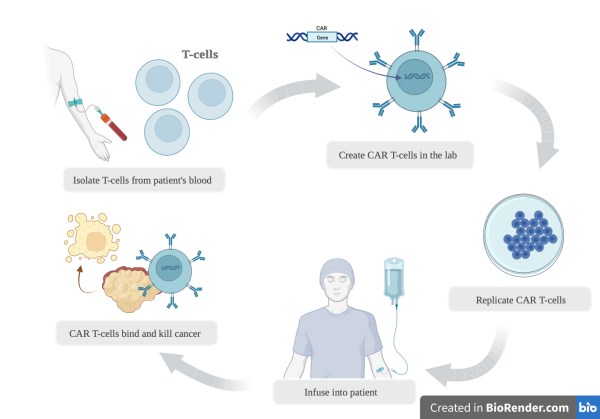
Reading time: 4 minutes Mallory Kane The immune system is the first line of defense in detecting and destroying cancer cells. Several mechanisms are in place to prevent and slow cancer growth. However, cancerous cells often can avoid destruction by the immune system. These cells may contain genetic mutations that make them invisible to immune... Continue Reading →
The Cost of Groundbreaking Cancer Treatment
Reading time: 5 minutes Colette Bilynsky New treatment strategies are almost constantly being tested in pre-clinical research and clinical trials, with many of them outlined in various OncoBites articles. This is incredibly important work as groundbreaking treatment strategies like CAR-T therapy have the capacity to radically improve patient outcomes. CAR-T therapy takes the patient's own... Continue Reading →
Critters in Cancer: Are Bacteria Visible to Tumor-Killing T Cells?
Reading time: 6 minutes Anthony Tao Bacteria are not often given the respect they sometimes deserve. People tend to consider them as foreign harbingers of plagues, colds, and rashes ‒ unwanted invaders that our immune systems are uniquely tasked to deport. Of course, it is very well accepted now that many of these microbes indeed... Continue Reading →
Spatiotemporal Degradation of a Specific Protein as a New Cancer Therapy
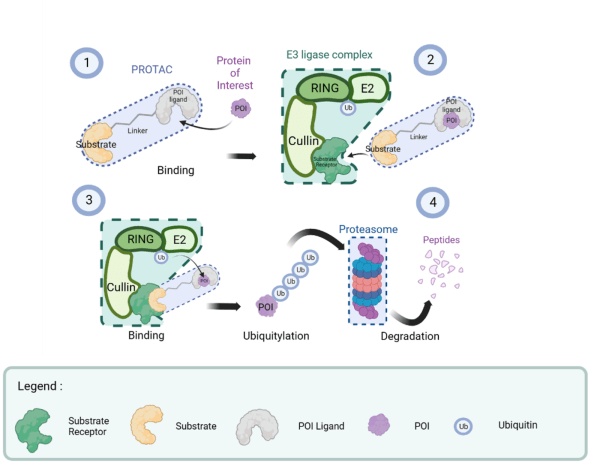
Reading time: 12 minutes Felicites Rapon Recently, chemically engineered molecules have been produced to incite the degradation of a given protein. These molecules are called PROTACs [1], which stands for PROteolysis-TArgeting Chimeras. How does the degradation of a protein work? The degradation of a protein, also called proteolysis, is achieved by the mechanism of ubiquitination.... Continue Reading →
Is Genomics Helping us With Oncology Like we Thought it Would?
Reading time: 5 minutes Susan Egbert Genomics has significantly advanced the field of oncology by elucidating the genetic components of a range of cancer types. This progress has contributed to enhanced cancer diagnoses and more efficacious treatments.1-3 From targeted therapies to immunotherapy, genomics has revolutionized the landscape of cancer care. However, the current status and... Continue Reading →
Tracing the Footsteps of Lung Cancer
Reading time: 4 minutes Aya Elmeligy Tumor heterogeneity and lung cancer progression Intratumor heterogeneity is a key concept in the evolution and progression of many tumors, including lung cancers. As a tumor grows, its DNA continually develops mutations to overcome the effects of therapies. The cells that acquire these mutations are known as a subclone.... Continue Reading →
Can a Virus Treat Cancer? An Oncolytic Virus May Be the Answer!
Reading time: 5 minutes Hema Saranya Ilamathi Viruses have long been associated with illnesses in humans, like the flu and AIDS, but many people are unaware that some viruses can be used to treat cancer. Oncolytic viruses (OVs) are natural or genetically engineered viruses that selectively target and destroy cancer cells. Using viruses to treat... Continue Reading →
Extracellular Vesicles in Cancer
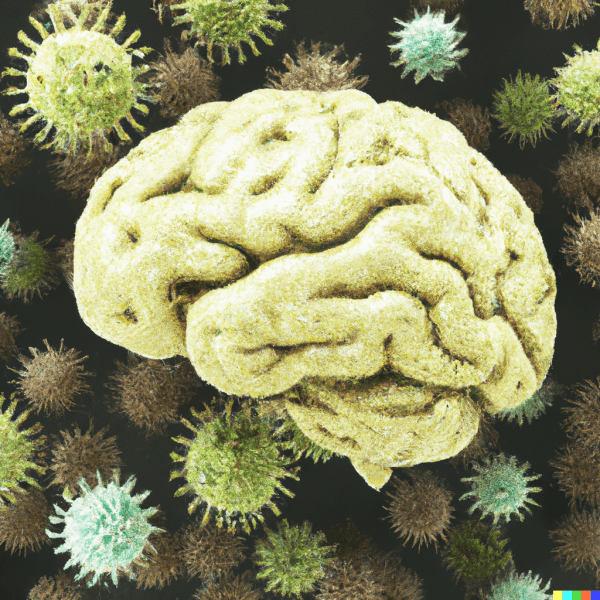
Reading time: 5 minutes Charlotte Boyd Extracellular vesicles (EVs) are small bubbles which are released from the cell. Cells produce multiple types of EVs which are different sizes ranging from approximately 30 nanometres to 10,000 nanometres. A nanometre is 10 million times smaller than a centimeter. This means that EVs are tiny and not visible... Continue Reading →
Take a Deep Breath… or Not: The Link Between Air Quality and Lung Cancer
Reading time: 3 minutes Melanie Padalino On February 3, 2023, a freight train carrying a large amount of vinyl chloride (a carcinogen) derailed in East Palestine, Ohio. The “clean-up” consisted of a controlled burn of the vinyl chloride, but this in turn generated a host of other hazardous chemicals including hydrogen chloride and phosgene which... Continue Reading →
Can Exercise Treat Cancer?
Reading time: 3 minutes Sydney Scatigno Why do people exercise? There are a number of reasons people choose to engage in physical activity like walking, running, lifting weights, or playing sports. The more obvious reasons can include losing weight, building muscle, or improving overall physical appearance, but can it help treat diseases like cancer? There... Continue Reading →
Collagen Can Fuel Cancer Growth
Reading time: 5 minutes Yonika Larasati Accumulating knowledge shows that cancer cells do not thrive in isolation. Just as seeds need suitable soil to flourish into plants, cancer cells might perish without an appropriate environment. This environment, known as the tumor microenvironment (TME), has become an emerging trait of cancer that can be a target... Continue Reading →
Patient-Derived Xenograft Models: Bridging the Gap Between Pre-clinical and Clinical Research
Reading time: 6 minutes Karli Norville It can take more than ten years to move a drug or therapeutic from discovery to FDA approval. Despite the years of research put in before a clinical trial begins, many therapeutics fail due to unforeseen safety complications or their lack of efficacy. Why do so many fail? Despite... Continue Reading →
Chromosomal Change: A Means for Cancer-Inducing Catastrophe
Reading time: 5 minutes Jessica Desamero Types of chromosomal abnormalities found in cancer Chromosomes are like books that store vast amounts of information, more precisely, DNA building blocks (genes) that compose all our genetic information. In this example, genes may seem as words spanning across the chromosomes that possess order and structure to give meaning... Continue Reading →
FLASHy Science: Looking at New Advances in Radiation Therapy
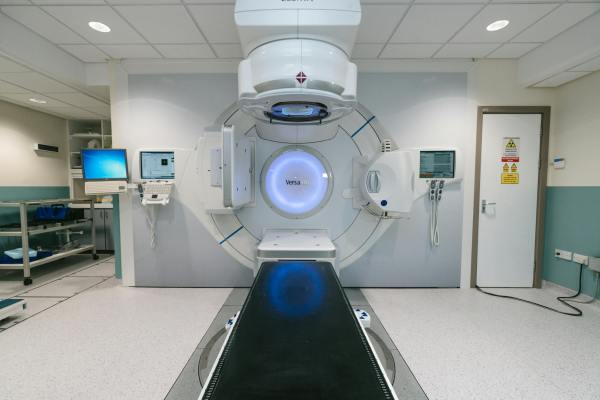
Reading time: 6 minutes Ryan Rispman Since its discovery, radiation has been a double-edged sword. On the one hand, radiation is a killer. It can break apart DNA, leading to mutations that can cause cancer and other diseases. Many of the early scientists who studied radioactive materials eventually ended up dying of radiation-induced illnesses1,... Continue Reading →
Recent Advances in mRNA-based Cancer Vaccines
Reading time: 4 minutes Indiwari Gopallawa After years of seminal research work, mRNA technology got its moment as a result of the Covid-19 pandemic. However, mRNA-based cancer vaccines remain a relatively new and untapped class of vaccines that show great potential. The enthusiasm for this novel technology has been increasing due to recently published experimental... Continue Reading →
Post-translational Modifications: The Balance of Intramolecular Toxicities
Reading time: 4 minutes Ian Lock By directing immune cells to attack tumor cells, immunotherapy uses the body’s own biological mechanisms to target and eliminate cancer. Recently this concept has been retooled for another class of therapeutics that capitalizes on a cell’s internal processes to target cancer cells. Adapted from Promega PROTACs or proteolysis-targeted chimeric... Continue Reading →
Systematic Racism in Cancer Care: From Henrietta Lacks to Modern Disparities
Reading time: 5 minutes Shan Grewal Henrietta Lacks was an African American woman born in 1920 in Virginia. In 1951, she experienced symptoms thousands of women experience today, a knot in her womb, abnormal uterine bleeding, and pelvic pain. She was sent to Johns Hopkins Hospital, where she was diagnosed with cervical cancer, now known... Continue Reading →
Phototherapy and its potential in cancer treatment
Reading time: 5 minutes Muhammad Ayhan Murtaza The word phototherapy comes from two words, “photo” and “therapy” which, evidently so, means “medical treatment using light”. The word has its roots in the older Greek language, but much like this old language, cancer is by no means a newer predicament. In fact, it actually predates human... Continue Reading →
Complexities in Metastasis Research
Reading time: 4 minutes Megan Majocha Can you imagine trying to put together clear, acrylic puzzle pieces? It is difficult to put together all the unknowns without a picture. Metastasis research is similar - trying to put the pieces together without knowing exactly how metastatic cells function in the human body. While cancer metastasis research... Continue Reading →
Cancer vs. Targeted Agents: A Molecular Arms Race
Reading time: 4 minutes Mia Hubert Chronic myelogenous leukemia (CML) is a slow-progressing disease resulting from an overproduction of blood cells originating from the bone marrow, known as myeloid cells. Before 2001, the standard of care included chemotherapy and bone marrow transplantation (BMT). Unfortunately, chemotherapeutic approaches were non-curative and BMT entailed a high-risk procedure with... Continue Reading →
AURORA US: Finding Solutions to Breast Cancer Metastasis
Reading time: 5 minutes Patty Spears Patients need more treatment options for metastatic breast cancer (MBC). MBC is when the cancer has spread from the breast to other parts of the body. Most patients with MBC stay on continuous treatment. This means that even those who live longer accumulate many toxicities (treatment costs and... Continue Reading →
Liquid Biopsy: The Clinical Utility of Circulating Tumor Cells
Reading time: 4 minutes Tala Tayoun A liquid biopsy test is a simple laboratory test done to sample and analyze non-solid patient biological tissue, i.e. blood. The era of liquid biopsy has revolutionized the field of cancer management. Over the last few years, we have witnessed significant technological advances in the detection and characterization of... Continue Reading →
How Does Inflammatory Bowel Disease Become Cancer?
Reading time: 5 minutes Colette Bilynsky The American Cancer Society has found colorectal cancer to be the 3rd highest cause of cancer deaths and 3rd highest estimated new cases in both men and women in 2022 [1]. The risk of colorectal cancer is significantly higher in people with inflammatory bowel disease (IBD): ulcerative colitis (UC),... Continue Reading →