
Reading time: 8 minutes
Charles Okila, MPH
Introduction
Picture this: a small sample from your routine blood test can be used to check several cancers at a glance. Rather than taking several samples from different individual cancers, a single test is sufficient to identify molecular cues indicating diagnostic problems. This is the emerging promise of multi-cancer early detection (MCED) technology. It is evolving beyond a laboratory concept, as many studies are testing whether blood-based screening is applicable to asymptomatic individuals.2 Recent findings published by the National Health Service (NHS)-Galleri trial presented a profound look at both the potential and possible limitations of the given technology.
What exactly is a multi-cancer test?
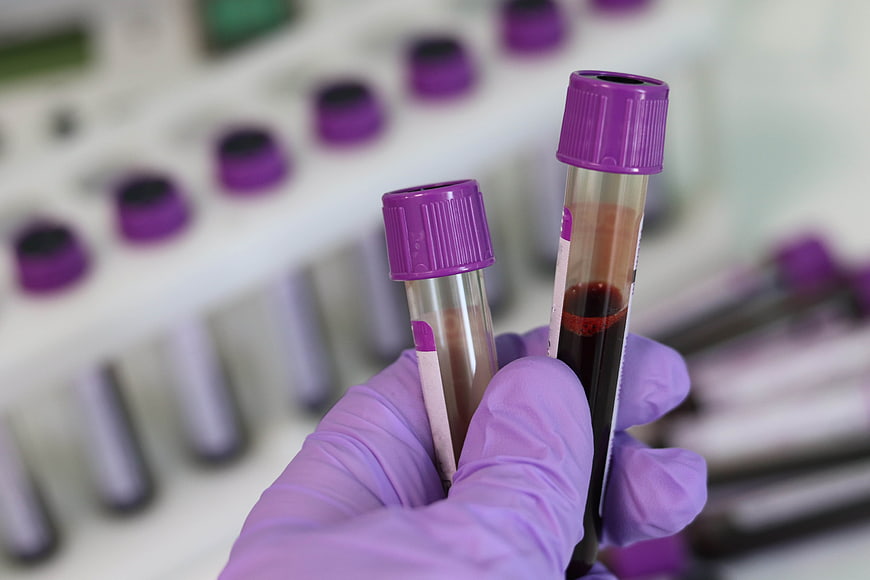
Cancer cells differ from normal cells in several ways, the main one being that they divide rapidly. As they do so, they release DNA fragments into the bloodstream, along with other biological components. MCED tests are used to detect these components in a blood sample, including proteins, DNA mutations, fragmentation patterns, or any combination of these markers.5 More so, some MCED tests are capable of detecting the origin of the cancer signals (termed cancer signal origin). This information helps guide oncologists toward appropriate diagnostic screening for confirmation.2 However, it is important to note that cancer signal detection is not considered a cancer diagnosis. If MCED is positive, further investigations are taken to ensure the presence of actual cancer.
Why is this technology attracting so much attention?
Advancements in technology have changed cancer screening outcomes. These programmes can detect the disease before symptoms appear, thereby enabling effective, proactive treatment. Despite this, recommended screening procedures are limited to breast, colorectal, cervical and lung cancers (for high-risk individuals), meaning many cancers are only detected once symptoms have progressed.2 That is why many cancers are still detected when symptoms are farther along. Based on the NHS-Galleri findings, about 17% of cancers in the United States (US) in 2017 and 6% in England (UK) in 2020 were diagnosed through guideline-recommended screening.2 All of this happened using separate screening programmes for every cancer, which was difficult and time-consuming for the burdened population. Also, individual cancers can be relatively uncommon in the general population, while the screening of each separately presents a myriad of issues, including but not limited to false positives, logistical barriers, and high costs. A single test that can detect multiple cancers is, therefore, preferred.2,5 But the question still remains: is the approach poised to improve people’s health?
What does the evidence tell us so far?
Research over the past years shows that MCED testing can detect molecular signals linked to different cancers from a single blood sample. However, the outcome of these tests depends on the cancer type, stage, and molecular component under investigation. The inclusion of multiple technologies is central to detecting diverse molecular signals, thereby making it difficult to reduce the protocol to a single screening of ‘accuracy.’5,10 What is encouraging is that findings in prospective research show that some MCED tests can attain the highest scores of accuracy. This is particularly significant when testing asymptomatic people. For example, in the PATHFINDER 2 study on Performance and safety of a multi-cancer early detection test, it achieved 99.64% specificity, with 39.3% 12-month sensitivity.1 This study provides evidence that MCED screening is applicable outside the laboratory and can be followed by confirmatory tests.
More recently, the NHS-Galleri randomized trial provided further evidence supporting the applicability of MCED in a large population setting. Out of 142,250 adults between the ages of 50 and 77, the screening showed a positive outcome in about 0.8-1.0% of participants across three test rounds, with a specificity between 99.50% and 99.60%. But all cancers showed sensitivity ranging from 26.7% to 37.2%, indicating inherent limitations. Basically, a test can be applied to identify people who are unlikely to have cancer while still failing to detect many cancers.2 These findings show that MCED tests cannot be judged by a single number. A useful test must detect clinically significant cancers, particularly at an early stage, while minimizing the risk of false positives and unnecessary screenings.
MCED reviews, therefore, emphasize the importance of analytical accuracy, coupled with clinical utility, healthcare integration, patient experience, and the possibility of overdiagnosis.5,7 There are also many signs showing that MCED testing can change the screening and detection of many cancers. As with the NHS-Galleri, cancer cases were accurately diagnosed between stages 1 and 3 in over 91% of test subjects, with true-positive outcomes.2 This evidence encourages the applicability of MCED, thereby enabling oncologists to identify the origins of the molecular signals and help them to determine the right screening to undertake. With all that, there is still an issue of the screening signal not translating to proof of saving lives. The distinction as follows is paramount in comprehending where MCED tests stand today.
Finding a signal is only the beginning
For anyone undergoing MCED screening, a positive outcome does not instantly answer the question: ‘Do I have cancer?’ Instead, a diagnostic process begins. The origin of the detected cancer signal plays an important role in guiding appropriate investigations, including imaging, endoscopy, biopsy, and other tests, to confirm the presence of cancer.2 This part is where the patient’s experience is apparent. In interviews conducted with 41 participants in the NHS-Galleri study, there were significant variations in the number of screenings, healthcare contacts, and the time required to complete the diagnostic pathway. Other participants described the ordeal as tedious in navigating the systems alone or advocating for their individual care.3 Evidence from other studies also shows false-positive concerns. In a recent study, a systematic review of 34 articles with 83637 test subjects reported high false-positive rates across many studies, but very few provided detailed information on follow-up investigations. The authors pointed to major gaps in evidence concerning patient experience, potential harm, and diagnostic resolution.6 This matter is alarming in the sense that the screening test success does not solely depend on test tube outcomes. The MCED test must fit into the healthcare system and have a proper response to the results.
The promise and the price
The MCED testing attraction is understandable. A single blood test has the potential to detect signals for several (if not all) cancers that currently lack a routine population check-up.5,9 If successful, this is poised to expand the proactive campaign on all cancers, where early detection will not depend on separate screening procedures for every type of cancer. A recent study also underscored the importance of computational methods in this field, showing the potential of machine learning in MCED to improve the interpretation of complex data in circulating data.10 However, broader screening undertakings demand more responsibilities. Follow-up investigations can prompt high healthcare costs, patient anxiety, and the detection of dormant cancers that may not affect the person during his or her lifetime. 6.7.9 These are among emerging concerns in the MCED field, as the technology spreads across the globe, bedeviled by cancer burden and existing healthcare inequalities in early detection and prevention of cancer.8 A technology that is effective in a well-resourced healthcare system does not automatically translate into a reliable screening tool worldwide.
So, how close are we?
It is clear that MCED screening has advanced beyond the experimental stage in the laboratory. Many studies support the fact that blood tests can detect molecular signals of multiple cancers, and large trials affirm that screening can be done in a large population.1,2 However, the field is yet to cross the most significant threshold, which is showing that MCED tests can reduce mortality associated with cancer or provide many benefits that outweigh the possible limitations and costs. This is because the NHS-Galleri study did not meet the key endpoint of decreasing the incidence of stage 3 or 4 cancers. 2,4 That does not mean that the technology is obsolete. Rather, there is a need for next-generation research to address the highlighted issues and reveal the yet-to-be-discovered possibilities of MCED tests.
Is it possible to improve sensitivity without compromising specificity? Is it possible to investigate positive outcomes fast and safely? Is it possible to minimize further series of investigations? Is it possible for healthcare systems to deal with the extra burden of workload? And finally, is it possible to detect these cancers very early to ensure long lives for the populace? For now, the answer to the question, ‘how close are we?’ is neither still far away nor very close. The world is at a point where MCED tests have demonstrated real scientific and clinical applicability. But the evidence backing routine population screening is still in the developmental stages. The future of cancer testing may indeed use a single blood sample to detect multiple cancers. The real measure of success will not be a test finding many cancer signals, but whether the detected signals lead to proactive, safe, effective care that improves patient outcomes.
Header Image Source: pickpik.com
Edited by Alexa Michel
References
- Nabavizadeh N, McDonnell C, Kurbegov D, Matrana M, Gadgeel S, Kim RH, Stipec G, Oeffinger KC, Demeure MJ, Lillard Jr JW, Kaltman R. Performance and safety of a multi-cancer early detection test: the PATHFINDER 2 study. Nature Medicine. 2026 Sep 22:1-0. https://doi.org/10.1038/s41591-026-04618-w
- Neal RD, Dolly S, Johnson P, Jones H, Kumar SH, Lee LY, Lee Y, Liang W, Round T, Smittenaar R, Warwick J. Performance of a multi-cancer early detection test in the randomized controlled NHS-Galleri trial. Nature Medicine. 2026 Sep 22:1-1. https://doi.org/10.1038/s41591-026-04652-8
- Marlow LA, Schmeising-Barnes N, Waller J. Experience of NHS diagnostic investigation following a multi-cancer early detection (MCED) screening test: qualitative interviews with NHS-Galleri trial participants who had a cancer signal detected. EClinicalMedicine. 2026 Jan 1;91. https://doi.org/10.1016/j.eclinm.2025.103733
- Swanton RC, Johnson P, Round T, Warwick J, Jones H, Kumar H, Liang W, Smittenaar R, Neal RD, Sasieni P. NHS-Galleri: primary results from a randomised controlled trial to assess the clinical utility of a multi-cancer early detection (MCED) test in population screening. J Clin Oncol. 2026 Jun 10;44(17 suppl). https://grail.com/wp-content/uploads/2026/05/Swanton_ASCO-2026_NHS-Galleri_FINAL-Slides-05.26.2026.pdf
- Imai M, Nakamura Y, Yoshino T. Transforming cancer screening: the potential of multi-cancer early detection (MCED) technologies. International journal of clinical oncology. 2025 Feb;30(2):180-93. https://doi.org/10.1007/s10147-025-02694-5
- Romeikat NL, Morgan-Young R, McCartney M, Sullivan F. When to stop digging: a systematic review on the impact of false positives in multi-cancer early detection and associated diagnostic work-up when used in asymptomatic population screening. BMJ Connections Oncology. 2026 Jun 3;3(1):1-2. https://doi.org/10.1136/bmjconc-2025-000103
- Lynge E, Andersen B, Bojesen SE, Petersen LK, Bech M, Bøgsted M, Dam MS, Egstrand S, Hvass AM, Kobylecki CJ, Lång K. Challenges in the future of cancer screening. International Journal of Cancer. 2026 Apr 15;158(8):2013-22. https://doi.org/10.1002/ijc.70286
- Balch CM, Liao N, Lam DS, Weitzel JN, Xu RH, Attard G, Bunn PA, Eggermont AM, He J, Kitagawa Y, Lim ST. The global cancer crisis: a review of growing burden, deepening inequality and initiatives for prevention and early detection. ecancermedicalscience. 2026 Feb 3;20:2071. https://doi.org/10.3332/ecancer.2026.2071
- Chatanaka MK, Diamandis EP. Benefits and Costs of Multi-Cancer Early Detection. The Journal of Applied Laboratory Medicine. 2026 Jul;11(4):977-81. https://doi.org/10.1093/jalm/jfag053
- Li Q, Liu H, Wang J. Value of Machine Learning Models for Cell-Free DNA-Based Multi-Cancer Early Detection: A Systematic Review and Meta-Analysis. Technology in Cancer Research & Treatment. 2026 Feb;25:15330338261425328. https://doi.org/10.1177/15330338261425328


Leave a Reply