
Reading time: 3 minutes
Korliss Britt
Low levels of myoglobin in breast cancer is a significant factor in prognosis of the disease. Since cancer cells have high metabolic requirements, these cells rely primarily on aerobic glycolysis for energy production. This pathway supports rapid cell growth by supplying intermediates for biosynthetic pathways, essential for sustaining cancer cell growth.
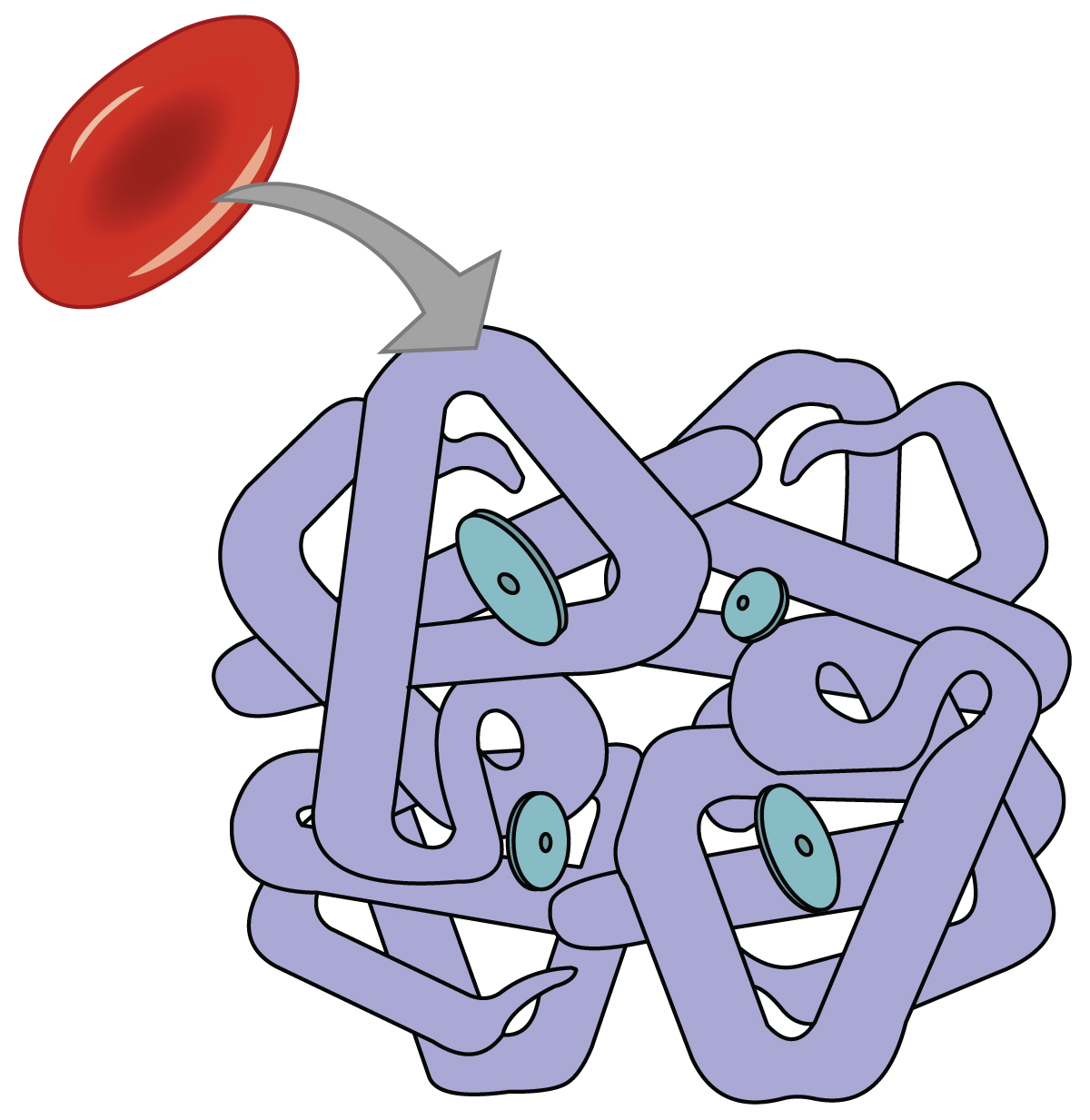
Myoglobin is a protein that is crucial for oxygen transport. This molecule has a heme moiety attached that enables oxygen transport within the body, especially in cardiac and skeletal muscles. This protein has been identified as impactful in the prognosis of breast cancer. In addition to O2 transport, this protein also plays a role in nitric oxide levels.
Breast cancer cells that express myoglobin show a decrease in the mitochondrial oxygen consumption rate. Mitochondrial oxygen consumption is crucial for cellular respiration, thus overexpression of myoglobin leads to cell cycle arrest and cell death. Studies showed that when myoglobin expression was silenced in the MDA-MB-468 cancer cell line, the OCR was significantly higher than MDA-MB-468 cells with non-targeting siRNA.
Current studies show that reactive oxygen species (ROS) are crucial for the induction of oxidative stress in tumors. Myoglobin plays an important role in modulating reactive oxygen species (ROS) and redox balance, which can further decrease mitochondrial function and ATP production. Studies showed that after addition of hydrogen peroxide to the human MCF-7 cell line, myoglobin expression increased above the mean (24 ng per 106 cells).
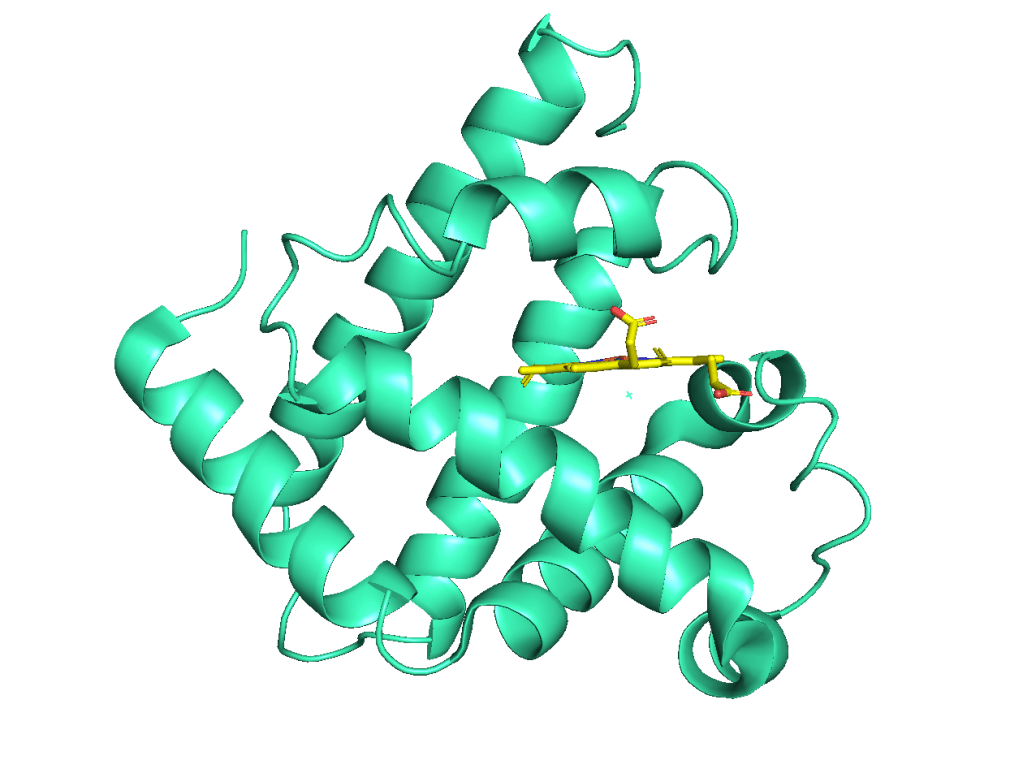
PDB: 1MBN. Rendered in PyMol.
Mutagenesis
Recently, studies have demonstrated that the mutation of K46 in myoglobin decreases the capacity of fatty acids to bind to the molecule. It was concluded that the double-lysine mutant Mb K45A/K63A decreased Mb binding to palmitic and oleic acid.
The residue K46, has been demonstrated through computational modeling to stabilize fatty acids in the heme pocket. The binding led to increased fatty acid oxidation in cardiomyocytes. Due to a high yield of ATP (high metabolic requirement), fatty acid oxidation is upregulated in some breast cancers. This can lead to increased cell migration, spreading the tumor to different parts of the body.
The decrease of oxygen consumption rate by myoglobin was found to be independent of fatty acid binding, via a K46M mutation study. Fatty acid oxidation is rate-limited by CPT1, and CPT1 is demonstrated to increase likelihood of apoptosis for breast cancer cells by decreasing ATP production.
Migration
In a scratch assay study, cancer cells were plated and observed over a 48-hr period. After the plate was ‘scratched’ with a pipette tip, the cells overexpressed with myoglobin had been demonstrated to decrease the amount of migration. Myoglobin overexpression decreased the closure by 6 hours, compared to the control, in MD-MBA-231 cell lines.
Discussion
Myoglobin was found to bind to fatty acids, but this mechanism was not responsible for mitochondrial fatty acid oxidation or cell migration. Oxidants generated by the heme prosthetic group were primarily responsible for gene expression in cell migration. While myoglobin increases oxidant production, the downstream effect is dysregulated redox homeostasis. Myoglobin decreases the basal and maximal oxygen consumption rate, a crucial factor for cell cycle arrest.
Takeaway
Myoglobin is involved in nitric oxide (NO) and redox regulation, influencing reactive oxygen species (ROS) and oxidative stress signaling in breast cancer tumors.
K45 residue in myoglobin is crucial for fatty acid binding.
Myoglobin’s heme moiety is crucial for the mechanism of fatty acid oxidation and cell migration.
Header Image Source: by Cenveo, licensed under a Creative Commons Attribution 3.0 United States, found on Fiveable
Edited by Dr. Celia Snyman
References
Elkholi, I. E., Elsherbiny, M. E., & Emara, M. (2022). Myoglobin: From physiological roles to potential implications in cancer. Biochimica et Biophysica Acta (BBA)-Reviews on Cancer, 1877(3), 188706.
Johnson, A. R., Rao, K., Zhang, B. B., Mullet, S., Goetzman, E., Gelhaus, S., … & Shiva, S. (2024). Myoglobin inhibits breast cancer cell fatty acid oxidation and migration via heme-dependent oxidant production and not fatty acid binding. Free Radical Biology and Medicine, 225, 208-220.
Postnikova, G. B., & Shekhovtsova, E. A. (2024). Myoglobin Expression by Tumor Cells and Its Role in Progression of Malignancy. Biochemistry (Moscow), Supplement Series A: Membrane and Cell Biology, 18(4), 285-295.
 OncoBites
Leave a comment