Reading time: 2 minutes
Krishnakoli Adhikary, PhD
Cancer is the second most leading cause of death in the world after ischemic heart disease. Global reports suggest that by 2030, the total number of deaths due to cancer will increase to 13 million. Over the years, oncology therapies have taken many forms, such as radiation therapy, chemotherapy, targeted delivery, immunotherapy, and stem cell transplants.
Animal venoms provide a rich cocktail of bioactive peptides, proteins, enzymes, and other organic and inorganic molecules and salts. Components of animal venoms have been thoroughly investigated for decades as potential drug leads due to their stability, diverse properties, and ability to bind to various receptors in the human body. The question is: how can these venoms be used in cancer treatments?
Arthropod venom components have been shown to have various anticancer properties. A recent study characterized the potent cytotoxicity of the peptide toxin BamazScplp1 from the venom of the scorpion Brotheas amazonicus against human breast cancer cell lines. Most significantly, the toxin proved to be highly cytotoxic against the lethal triple-negative MDA-MB-231 breast cancer cells. Moreover, BamazScplp1 induced cell death by necrosis, rather than apoptosis. One of the biggest hurdles faced by the scientists in this study was the low selectivity of the toxin . They proposed encapsulation of the toxin in carriers such as biodegradable polymers or its conjugation with monoclonal antibodies could increase its specificity towards the tumor cells.
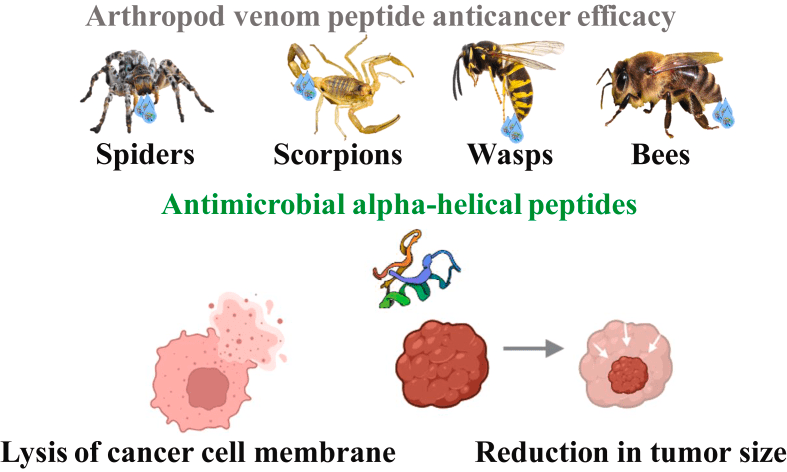
Figure 1: Anticancer efficacy of arthropod venoms
Many toxins from spider venoms can penetrate cell membranes. Lycosin-I, a peptide toxin from the venom of the spider Lycosa singorensis, destroys cancer cells by penetrating the cell membrane and causing mitochondrial death. When conjugated with gold nanoparticles, the toxin is more selective and targeted towards the cancer cells. It has minimal side effects and is eventually eliminated from the bloodstream by the reticuloendothelial system.
What does the future of venoms in cancer treatment look like? A lot of work remains to be done. Cytotoxicity of the cancer cells in presence of the toxin were tested in vitro. This is one of the biggest drawbacks, especially with respect to lymphoma and leukemia. Another disadvantage is the poor selectivity of the venom peptides towards the cancer cells. Without selective targeting of cancer cells, the risk of the toxin killing healthy cells in the body, along with the cancer cells, remains. Future research should focus on moving to in vivo studies in order to provide a more realistic demonstration of treating cancer with animal venom components.
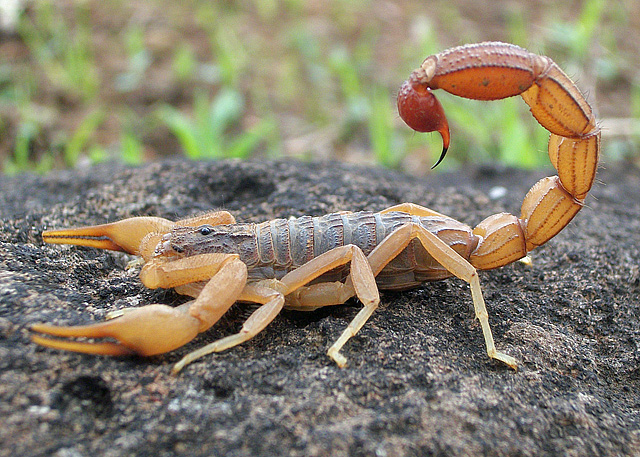
Header Image Source: https://commons.wikimedia.org/wiki/File:Scorpion_Photograph_By_Shantanu_Kuveskar.jpg
Figure 1 Source: Ghodeif, Sara K, et al. “Arthropod Venom Peptides: Pioneering Nanotechnology in Cancer Treatment and Drug Delivery.” Cancer Pathogenesis and Therapy, 1 Apr. 2025, https://doi.org/10.1016/j.cpt.2025.03.005. https://www.sciencedirect.com/science/article/pii/S2949713225000357
Edited by Samantha Zimmerman
References
- Reis MB, De Castro Figueiredo Bordon K, Martins JG, Wiezel GA, Cipriano UG, Emerson de Lima Procópio R, Deperon Bonato VL and Arantes EC (2025) A novel scorpine-like peptide from the amazonian scorpion Brotheas amazonicus with cytolytic activity. Front. Pharmacol. 16:1652614. doi: 10.3389/fphar.2025.1652614. https://www.frontiersin.org/journals/pharmacology/articles/10.3389/fphar.2025.1652614/full
- Rapôso C. Scorpion and spider venoms in cancer treatment: state of the art, challenges, and perspectives. J Clin Transl Res. 2017;3(2):233-249. Published 2017 May 24. https://pmc.ncbi.nlm.nih.gov/articles/PMC6410669/
- Malachias-Pires GM, Filardi ETM, Romanazzi M, et al. Animal Venoms as Potential Antitumor Agents Against Leukemia and Lymphoma. Cancers (Basel). 2025;17(14):2331. Published 2025 Jul 14. doi:10.3390/cancers17142331. https://pmc.ncbi.nlm.nih.gov/articles/PMC12294047/
- Guo R, Guo G, Wang A, Xu G, Lai R, Jin H. Spider-Venom Peptides: Structure, Bioactivity, Strategy, and Research Applications. Molecules. 2023 Dec 20;29(1):35. doi: 10.3390/molecules29010035. PMID: 38202621; PMCID: PMC10779620. https://pubmed.ncbi.nlm.nih.gov/38202621/
- de Oliveira, A.N., Soares, A.M. & Da Silva, S.L. Why to Study Peptides from Venomous and Poisonous Animals?. Int J Pept Res Ther 29, 76 (2023). https://doi.org/10.1007/s10989-023-10543-0. https://link.springer.com/article/10.1007/s10989-023-10543-0
 OncoBites

Leave a comment