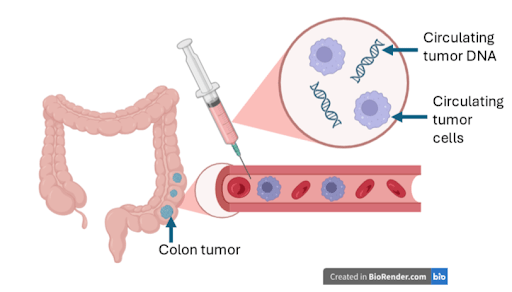
Reading time: 6 minutes Nicole Bowens, PhD The incidence of colorectal cancer (CRC) is currently rising in adults aged 20 to 49 years.1 Increasing accessibility to screening may help improve early detection for this population. Liquid biopsy is one method that may accomplish this goal. Additionally, liquid biopsy may also help to improve outcomes after... Continue Reading →
Disparities in Cancer Care: A Closer Look at Incarcerated Populations
Reading time: 3 minutes Maya Razmi Cancer is one of the leading causes of death worldwide - in 2022, there were about 20 million new cases of cancer and 9.7 million cancer-related deaths. Though some individuals have access to treatment, many may not be so fortunate. Vulnerable populations are particularly susceptible to cancer, as they... Continue Reading →
The Need for Improved Mental Health Management for Cancer Patients
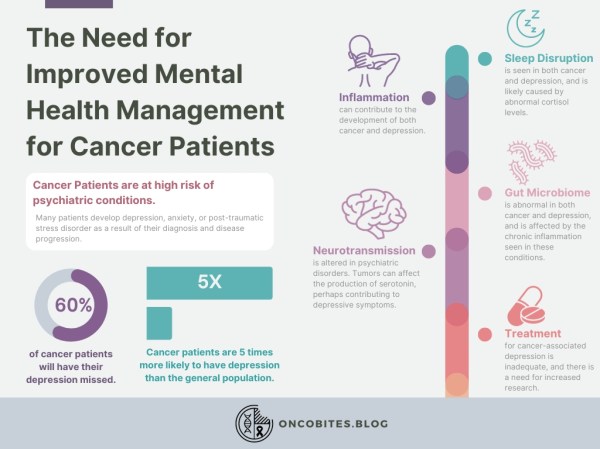
Reading time: 8 minutes Colette Bilynsky The number of people who will be diagnosed with cancer in their lifetime is growing, with estimates saying that by 2030, more than 26 million people worldwide will be affected by some type of cancer [1]. However, as noted throughout Oncobites, treatments are continually improving, resulting in increased patient... Continue Reading →
Meeting the Needs Of Cancer Survivors: A Growing Healthcare Imperative
Reading time: 6 minutes Kate Gavaghan Being diagnosed with cancer is terrifying, and going through treatment is physically and emotionally challenging. So many patients are justifiably focused on “getting to the end” that they can be a little blindsided by survivorship. It’s not really a return to normal life, or the life one had before... Continue Reading →
Cancer Research and Care Under the Biden Administration
Reading time: 5 minutes Michael Marand In the third most-viewed TED talk of all time, Simon Sinek explained: people do not care what you do, they care why you do it. He asserted great leaders inspire action by communicating their why. For many of us involved in cancer research or cancer care, our work comes... Continue Reading →
Telemedical Applications for Managing Cancer Care During COVID-19
Reading time: 6 minutes Andrew C. Griggs, Jordan E. Rogers, Elizabeth H. Lazzara Research Engineering and Applied Collaborations in Healthcare (REACH) Lab Patients with cancer may be at greater risk of contracting or developing complications related to COVID-19. Given the lack of a vaccine or specific antiviral therapy for COVID-19 at this time, the large... Continue Reading →
Looking Ahead: How Climate Change Could Affect Cancer
Reading time: 4 minutes Brittany Avin McKelvey Climate change is a global issue with far-reaching effects on society. It is caused partly by greenhouse gases, including carbon dioxide, that trap the sun’s radiation in our atmosphere. While some warming and cooling effects are part of Earth’s natural cycle of climate change, the burning of fossil... Continue Reading →
Cancer and COVID-19: How do you care for patients when hospitals are danger zones?
Reading time: 7 minutes Sara Musetti Disclaimer: This article is based on summaries of academic studies and medical society guidelines. It is not intended as medical advice; if you find yourself needing to seek care during this pandemic, please contact your doctor for a discussion based on your hospital’s resources and your specific needs. The... Continue Reading →
Human Factors and Cancer Care
Reading time: 4 minutes Jordan E. Rogers, Andrew C. Griggs, Elizabeth H. Lazzara Research Engineering and Applied Collaborations in Healthcare (REACH) Lab Cancer is a prevalent disease that manifests drastically differently across individuals due to the interplay of multiple factors. Due to the disease’s multifaceted nature, the provision of safe, quality care within cancer is... Continue Reading →