Reading time: 5 minutes
Shan Grewal
Henrietta Lacks was an African American woman born in 1920 in Virginia. In 1951, she experienced symptoms thousands of women experience today, a knot in her womb, abnormal uterine bleeding, and pelvic pain. She was sent to Johns Hopkins Hospital, where she was diagnosed with cervical cancer, now known to be caused by HPV infection.1 Her tumor was biopsied and sent to pathologist and cell biologist Dr. George Otto Gey, as was routine diagnostics routine. Eight days later, Dr. Gey curiously obtained another sample for research purposes, without her explicit consent.2 Dr. Gey noticed the strangest thing when studying the cells: They would not die. Henrietta’s cells proliferated indefinitely, and Dr. Gey continued to study them. He codenamed them HeLa cells and expanded colonies to use for research.1,2 This was the first immortalized cell line to be created and distributed. HeLa cells have been instrumental for research, featuring in over 110,000 research publications and several Nobel prizes, including Dr. Elizabeth Blackburn’s famed discovery of human telomerase, the development of the polio vaccine, and were even sent to outer space.1
While it may feel natural to applaud this stunning story of serendipitous discovery creating a paradigm shift in research, we must not forget the tragedy at its core. While Dr. Gey achieved great scientific fame, Henrietta’s condition declined, and she passed away only 7 months after the diagnosis.1,2 Her own family was unaware of that a part of their mother was still being propagated until 20 years after her death, when researchers requested their blood samples for further investigation, and they have never received a dime of compensation1,2 (Some biomedical companies sell a version of Henrietta’s cells online for $3000-4000 for 10 million cells). Much of this story is rooted in the deep racism of 1950s America. Henrietta only went to Johns Hopkins because it was one of the few institutions accepting black patients.1 Cervical cancer disproportionately affects and kills black women.3 At the time, black Americans were frequently subjected to medical research, usually without their consent (look no further than the Tuskagee Syphilis Study that took place at the same time).
Racism in cancer care did not start with Henrietta Lacks. Our earliest records of cancer epidemiology from the 1920s show it was believed to be a disease of the wealthy. Poorer people of color were presumed to be immune to this deadly disease, and this was reinforced by shorter life expectancies as they rarely reached the older age when cancer rates rapidly increase.3 Unfortunately, the story of systemic racism in cancer care still persists today. While scientific discovery has progressed exponentially since the discovery of HeLa cells, Black, Indigenous, and Persons of Color (BIPOC) still face substantial discrimination in healthcare. The American Cancer Society states Black cancer patients have a 20% greater mortality rate than their white counterparts.4 Several POC communities have higher rates and mortalities of many types of cancers, including breast, colorectal, prostate, cervical, and kidney cancer.4
BIPOC communities lack equal access to care, an issue that prevails in all areas of healthcare. Race often overlaps with socioeconomic status: Black and Hispanic people are two- to three times more likely to be uninsured than their white compatriots.5 A lack of insurance can be a barrier for BIPOC patients to receive cancer screenings or diagnostic tests or afford costly treatment options. Language can also play a role, as non-English speaking people of color are more likely to believe they experience bias in cancer care.6 Furthermore, while most doctors are certainly not racist, implicit bias can be unconscious. A study of 400 American hospitals found black patients with heart disease receive older, cheaper, and more conservative treatments.7 Additionally, historic cancer awareness campaigns were targeted at White people.3 Accessibility, affordability, and implicit bias are just a few of the factors at play contributing to disparities that exist in American cancer care.
To finish, let’s go back to cancer research. While people of color historically sacrificed the most for cancer research (often unwillingly), today they are underrepresented in research. For instance, breast cancer, the poster child of cancer research, largely focuses on Estrogen Receptor (ER)+ disease, which is more prevalent in White women, while ER– disease is further behind despite being most prevalent in Black women.8 Furthermore, many of our genomic studies pull from databases lacking adequate diversity.8–10 POC researchers are underrepresented in academia.11 The list of disparities could go on, but the bottom line is that despite the horrific mistreatment of POC research participants, we have a one-dimensional understanding of a disease that affects us all.
The path ahead to improve racial disparities in cancer treatment is just as grand as the path to understanding cancer biology has been. While the scientific world profited from unethical research on Henrietta Lacks, her own community has seen the least benefit. Racism is real, and we must not forget about past tragedies as we look to the future to build a more inclusive and just society.
You can learn more about Henrietta Lacks and her family’s fight against injustice through Rebecca Skloot’s biography, The Immortal Life of Henrietta Lacks, and subsequent film.
Edited by Maha Said
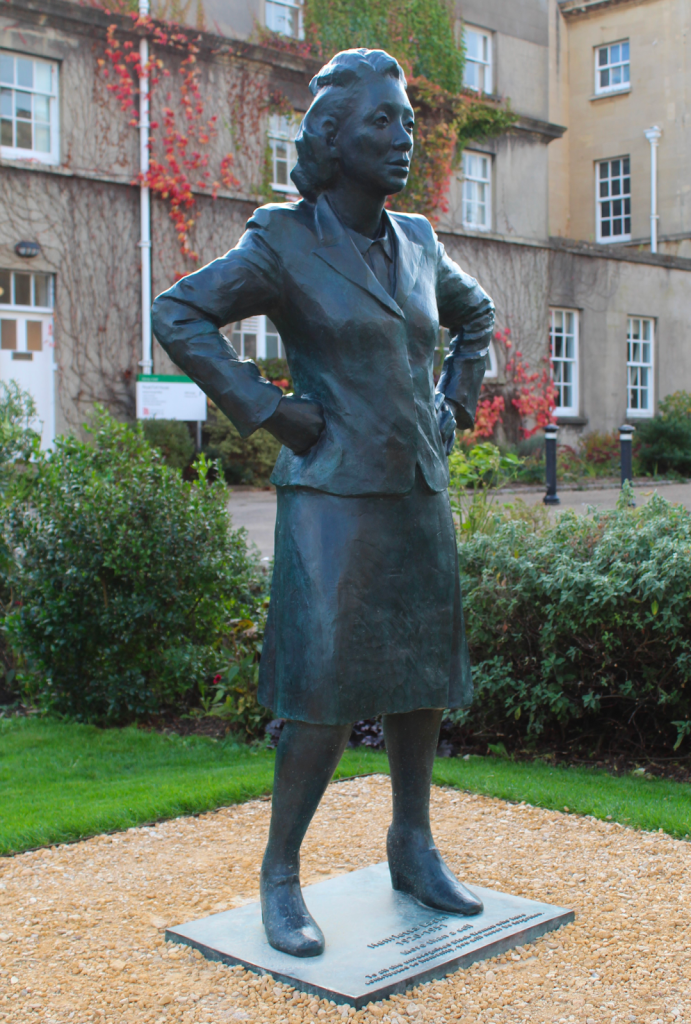
Header Image: A statue of Henrietta Lacks in Bristol, England. Soon, Henrietta’s hometown, Roanoke, Virginia, will erect a statue of her to replace an existing Robert E. Lee memorial. Source: Wikimedia Commons
References
- Skloot, R. (2010). The Immortal Life of Henrietta Lacks. Gale/Cengage.
- Watson, D. (2010, May 10). Cancer killed Henrietta Lacks – then made her immortal. The Virginian Pilot. Retrieved from https://www.pilotonline.com/news/health/article_17bd351a-f606-54fb-a499-b6a84cb3a286.html
- Wailoo, K. (2017). How cancer crossed the color line. Oxford University Press.
- SEER, S., Epidemiology, and End Results Program,. (2021). Cancer Stat Facts: Cancer Disparities. Retrieved March 17, 2021 from https://seer.cancer.gov/statfacts/html/disparities.html
- Baumgartner, J., Collins, S., & Radley, D. (2021, June 9). Racial and ethnic inequities in health care coverage and access, 2013–2019. Racial and Ethnic Inequities in Health Care Coverage and Access | Commonwealth Fund. Retrieved from https://www.commonwealthfund.org/publications/issue-briefs/2021/jun/racial-ethnic-inequities-health-care-coverage-access-2013-2019
- Campesino, M., Saenz, D. S., Choi, M., & Krouse, R. S. (2012). Perceived discrimination and ethnic identity among breast cancer survivors. Oncology Nursing Forum, 39(2), E91–E100. https://doi.org/10.1188/12.ONF.E91-E100
- Bridges, K. M. (n.d.). Implicit Bias and Racial Disparities in Health Care. American Bar Association. https://www.americanbar.org/groups/crsj/publications/human_rights_magazine_home/the-state-of-healthcare-in-the-united-states/racial-disparities-in-health-care/
- Jones, R. A., Hirschey, R., Campbell, G., Cooley, M. E., Somayaji, D., Lally, R., Rueter, E. K., & Gullatte, M. M. (2021). Update to 2019-2022 ONS Research Agenda: Rapid Review to Address Structural Racism and Health Inequities. Oncology nursing forum, 48(6), 589–600. https://doi.org/10.1188/21.ONF.589-600
- Eche IJ, & Aronowitz T (2020). A Literature Review of Racial Disparities in Overall Survival of Black Children With Acute Lymphoblastic Leukemia Compared With White Children With Acute Lymphoblastic Leukemia. Journal of Pediatric Oncology Nursing, 37(3), 180–194. 10.1177/1043454220907547.
- Spratt DE, Chan T, Waldron L, Speers C, Feng FY, Ogunwobi OO, & Osborne JR (2016, August 1). Racial/Ethnic Disparities in Genomic Sequencing. JAMA Oncol, 2(8), 1070–1074. 10.1001/jamaoncol.2016.1854
- Nazha B, Mishra M, Pentz R, & Owonikoko TK (2019). Enrollment of Racial Minorities in Clinical Trials: Old Problem Assumes New Urgency in the Age of Immunotherapy. American Society of Clinical Oncology Educational Book(39), 3–10. 10.1200/edbk_100021
 OncoBites
Leave a comment