
Reading time: 4 minutes
Madeline J. Morrisson
What are miRNAs?
Within a cell, information flows from DNA to RNA to protein, in a process known as the Central Dogma of biology. RNA is a relatively short-lived molecule, and is almost always translated into protein. The key word here is almost. One of the exceptions to this flow is microRNAs (miRNAs). miRNAs are small, around 19-25 nucleotides long, while protein-coding RNAs start at around 75 nucleotides. miRNAs are considered noncoding RNAs (ncRNA), as they are not translated to protein, but they play a role in biological processes via interaction with coding RNA, namely messenger RNA (mRNA).
miRNAs were first published in 1993 by Rosalind Lee and Rhonda Feinbaum, in the lab of Victor Ambros. This won the Nobel Prize in Medicine or Physiology in 2024, shared with Gary Ruvkun. For more information on miRNA, the Nobel Prize website, and the recorded lectures by both laureates are great ways to get started 1.
MiRNAs and Cancer
In cancer, regular cellular functions become aberrant, and miRNAs are no exception to this. Cancer-causing mutations take place at the DNA level and affect either oncogenes or genes that are tumor suppressors. These mutations can affect the production or function of miRNAs, contributing to processes we would consider attributes of cancer. For example, miR-21 has been shown to bind to a region of PTEN mRNA, preventing it from being translated to protein, in a process called silencing 2. PTEN is a tumor suppressor gene, meaning it prevents the over activity functions that are considered hallmarks of cancer. The silencing of PTEN leads to the over activity of signaling pathways that promote cell growth, proliferation, metabolism, and survival, which is a collection of components of cancer3. The over activity of these pathways leads to the production of more miR-21, in what is called a positive feedback loop.
MiRNAs for as Cancer Biomarkers
While miRNA can be found in tissue, it can also be shedded from a tumor, and circulate cell-free in blood, urine, and other body fluids, enabling it to act as a biomarker. We look to biomarkers to determine if a disease is present, what treatment is best for a patient, and if the treatment is working.
Some miRNA is contained within microvesicles or exosomes, which are lipid-based packages for small molecules. Other miRNAs are associated with protein complexes, and still others are simply small and free-standing, making them more stable than a larger structure 4. Increased or decreased concentrations of miRNAs are used as biomarkers for cancer. Blood draws are considered a less invasive diagnostic method, which adds to the appeal of biomarkers found within the blood. For example, miR-18a can distinguish pancreatic cancer patients from healthy individuals. It was found that patients who have strong expression of miR-18a in primary tissues have increased miR-18a in their plasma, and that the surgical removal of these tumors leads to a decrease in circulating miR-18a5. Not all pancreatic patients have increased miR-18a, likely due to differences in cancer genetic profile. There is yet to be a clinically approved screening method for miR-18a in pancreatic cancer; however there are tests for other miRNAs, such as miR15 -16 in chronic lymphocytic leukemia 6.
MiRNAs for Cancer Treatment
While there are no miRNA cancer treatments with clinical approval, they stand as a promising target. Unlike traditional chemotherapies, miRNA is more specific, and can be packaged in exosomes to target tumor tissue, pairing into a precision medicine approach. There is still a chance of off-target effects or immune reactions, but the goal of pre-clinical testing is to decrease these 7. The success of other RNA-based therapies, such as the mRNA COVID-19 vaccine, further supports the viability of this line of therapy. Some proposed miRNA treatments would inhibit the function of miRNA increased in a specific cancer, while others would simply replace miRNA that is decreased in cancer 7. There are several miRNA based treatments in Phase 1 clinical trials, and even more in development 7.
Conclusion
miRNA is a deviation from the typical information flow within a cell and can play many roles in normal cell function. Like any other cellular function, it can be hijacked and become aberrant within cancer. The silencing or increase of a specific miRNA can be a driving force for cancer, or useful as a biomarker. Because of this, miRNA makes a desirable target for cancer treatment, but there are still steps to clear before the first miRNA therapeutic is used in the clinic.
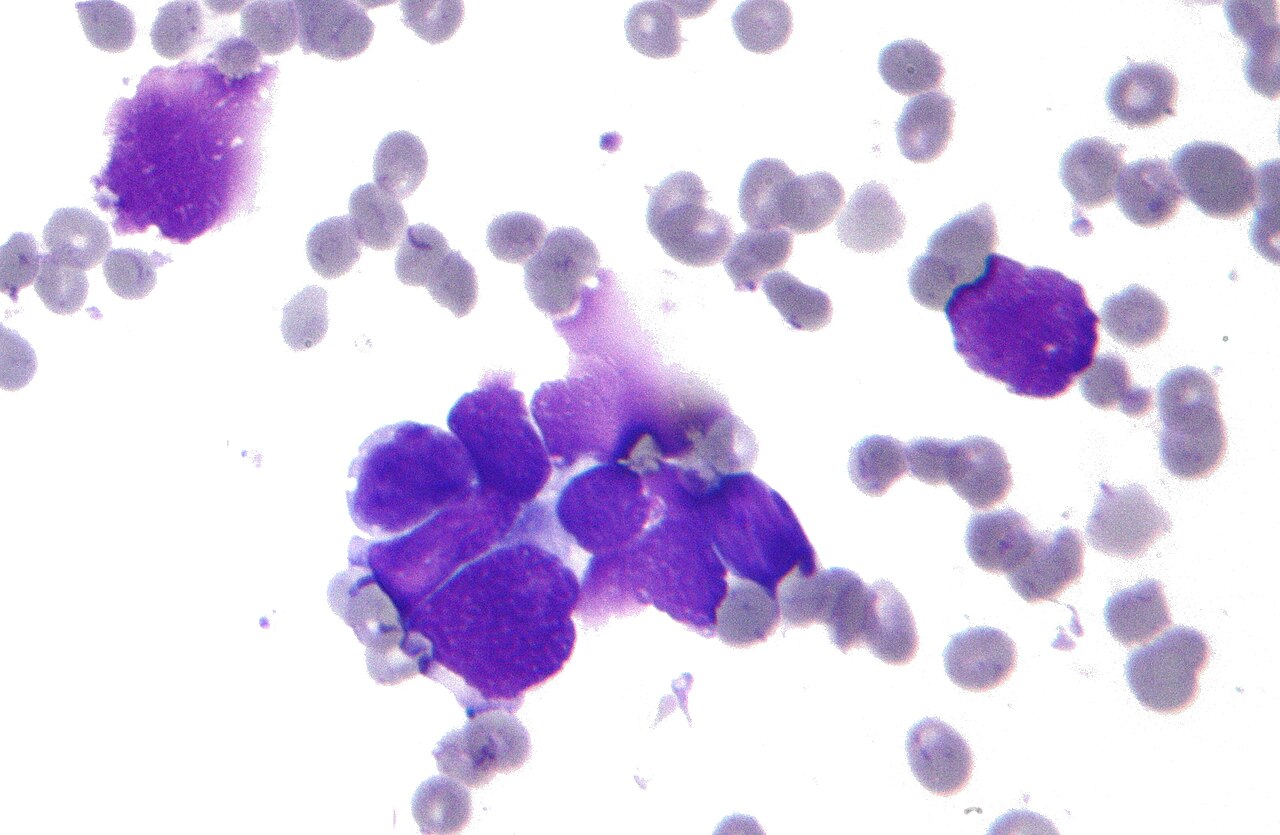
Header Image Source: Wikimedia Commons (under Creative Commons license)
Edited by Karli Norville
References
- Advanced information. NobelPrize.org. Nobel Prize Outreach 2025. Thu. 11 Dec 2025. <https://www.nobelprize.org/prizes/medicine/2024/advanced-information/>
- Zhang, X., Liu, C., Li, H., & Guo, L. (2020). Effects of miR-21 on proliferation and apoptosis of WT cells via PTEN/Akt pathway. Experimental and therapeutic medicine, 19(3), 2155–2160. https://doi.org/10.3892/etm.2019.8376
- Luongo, F., Colonna, F., Calapà, F., Vitale, S., Fiori, M. E., & De Maria, R. (2019). PTEN Tumor-Suppressor: The Dam of Stemness in Cancer. Cancers, 11(8), 1076. https://doi.org/10.3390/cancers11081076
- Kai,K., Dittmar R.L., Sen S., Secretory microRNAs as biomarkers of cancer. (2018) Seminars in Cell & Developmental Biology, 78, 22-36 https://doi.org/10.1016/j.semcdb.2017.12.011.
- Morimura, R., Komatsu, S., Ichikawa, D. et al. Novel diagnostic value of circulating miR-18a in plasma of patients with pancreatic cancer. Br J Cancer 105, 1733–1740 (2011). https://doi.org/10.1038/bjc.2011.453
- Wolff, D. J., Bagg, A., Cooley, L. D., Dewald, G. W., Hirsch, B. A., Jacky, P. B., Rao, K. W., Rao, P. N., Association for Molecular Pathology Clinical Practice Committee, & American College of Medical Genetics Laboratory Quality Assurance Committee (2007). Guidance for fluorescence in situ hybridization testing in hematologic disorders. The Journal of molecular diagnostics : JMD, 9(2), 134–143. https://doi.org/10.2353/jmoldx.2007.060128
- Martino, M.T.D., Tagliaferri, P. & Tassone, P. MicroRNA in cancer therapy: breakthroughs and challenges in early clinical applications. J Exp Clin Cancer Res 44, 126 (2025). https://doi.org/10.1186/s13046-025-03391-x
 OncoBites

Leave a comment