
Reading time: 3 minutes
Dr. Preeti Roman
Cancer is a major cause of sickness and death worldwide1. In 2022, doctors found 20 million new cancer cases2 and nearly 10 million people died from cancer worldwide.1
The effects of cancer vary from developed to developing countries. While lung cancer is the most common cancer in men, breast cancer is the most common cancer in women.2 Cancer screening helps doctors diagnose cancers early.
In this article you will learn the recent global statistics, why cancer screening matters and ways to prevent cancer.
What is Cancer?
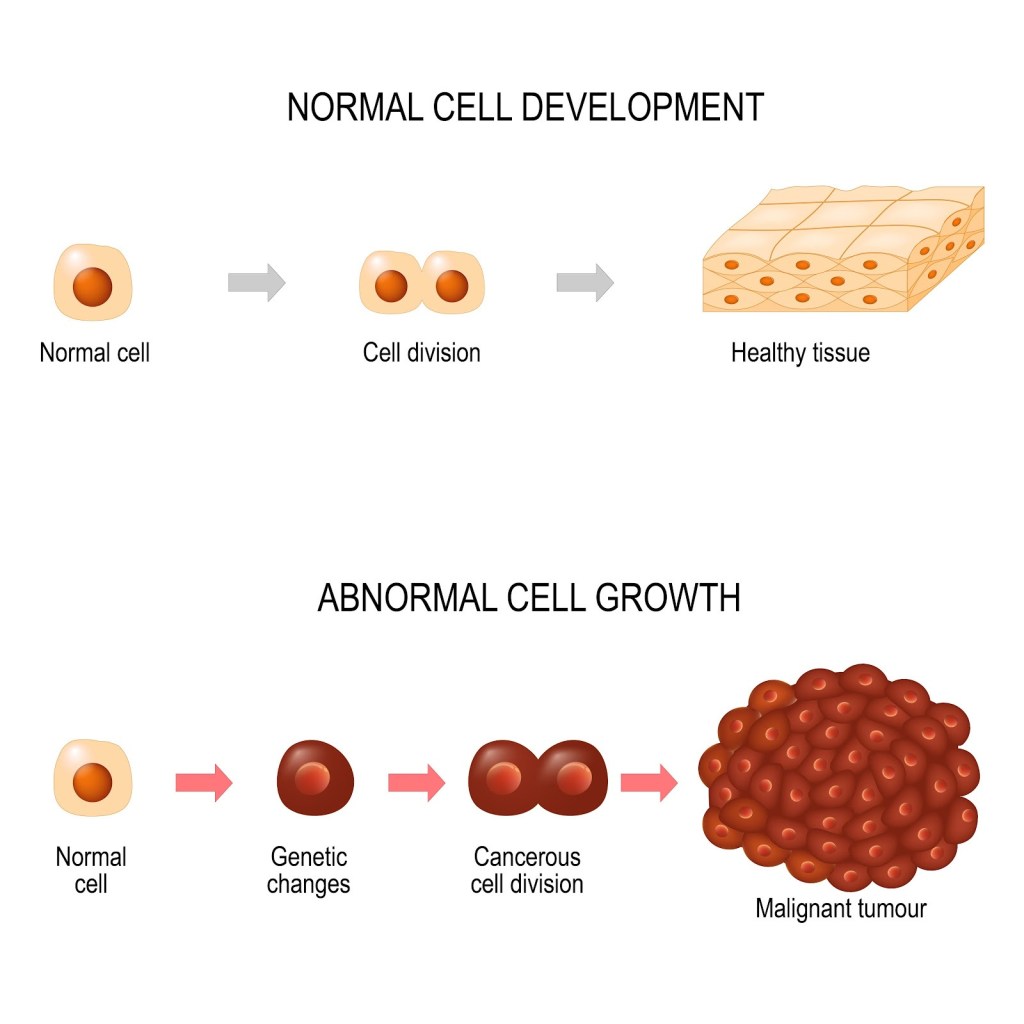
Cancer happens when some cells in the body grow too fast. These cells can form lumps or spread to other body parts.
Cancer affects the organs like the lungs, breast, colorectal and prostate.
What is Cancer Screening?
Cancer screening is the process of checking your body for signs of cancer, even when you might be otherwise healthy. Screening tests are useful to detect and prevent cancers early.
Important Cancer Screening Tests
- Breast Cancer Screening
Breast Cancer is the most common cancer in women worldwide.3 It is the second leading cause of death in them.3
Methods which are used for the screening of breast cancer are clinical breast examination, self breast examination and Mammography. Mammography is the most useful and popular screening tool.
The American Cancer Society recommends annual mammography for women aged 45 years and above.4
- Cervical Cancer Screening
Cervical cancer screening is used for early detection and prevention of cervical cancer.3
This is one cancer that has shown a decrease in incidents and mortality rates by the use of simple screening techniques in developed countries. Cervical screening involves Pap smear and HPV (Human Papilloma Virus) test.3
Pap smear test detects abnormal cell growth in the cervix and HPV test detects high-risk virus strains that link to cervical cancer.
HPV infection is the major cause of cervical cancer. The HPV vaccination is an important tool to prevent cervical cancer.3
- Colorectal Cancer Screening
Colorectal cancer screening starts at age 40 years in high-risk populations. Most organisations recommend beginning screening after the age of 45 years.
Colonoscopy is the screening tool used to detect colorectal cancer.
Screening tests can find non-cancerous polyps with the potential to become cancerous. Your doctor might remove these polyps to prevent colon cancer.
Other colorectal screening methods are
- Fecal occult blood test
- Virtual colonoscopy
- Flexible sigmoidoscopy
- High contrast barium enema
- Prostate Cancer Screening
Prostate cancer is commonly seen in men. The primary screening tests are Prostate Specific Antigen (PSA), Digital Rectal Examination (DRE) and Trans-Rectal Ultrasonography (TRUS). Prostate cancer progresses slowly. The screening test may start at the age of 55.
- Lung Cancer Screening
Lung cancer is the most common cancer worldwide. A major reason for lung cancer is smoking.
Screening is advised if one has a significant history of smoking. Sputum Examination and low dose CT scanning are also tools for lung cancer screening.
Cancer Prevention
By screening we can reduce the mortality from common cancers. But by taking preventive measures, we can reduce both the mortality and incidence of cancer.
We can prevent cancer by following these steps:
- Do not smoke
- Eat fruits and vegetables
- Reduce your weight
- Exercise daily
- Avoid alcohol
- Eat healthy,fresh food
- Don’t eat packaged/processed foods
- Protect your skin from the sun
- Attend regular checkups
- Get vaccinated against HPV and Hepatitis B
- Drink enough water
Cancer Burden in Future
WHO report says that cancer patients will keep increasing by 2050.5 80% cases will be increased as compared to 2022.
Header Image Source: © Nick Youngson CC BY-SA 3.0 Alpha Stock Images
In-text Image Source: from iStock.com
Edited by Dr. Chiamaka Wisdom-Asotah
References
1)World Health Organization. Cancer. WHO Newsroom Fact Sheets. 2025. Available from: https://www.who.int/news-room/fact-sheets/detail/cancer
2)Bray F, Laversanne M, Sung H, Ferlay J, Siegel RL, Soerjomataram I, et al. Global cancer statistics 2022: GLOBOCAN estimates of incidence and mortality worldwide for 36 cancers in 185 countries. CA A Cancer J Clinicians [Internet]. 2024 May [cited 2025 Dec 30];74(3):229–63. Available from: https://acsjournals.onlinelibrary.wiley.com/doi/10.3322/caac.21834
3)Staff, C. R. I. “Early Detection Saves Lives: The Essential Cancer Screenings You Can’t Afford to Skip.” Cancer Research Institute, 11 Feb. 2025, https://www.cancerresearch.org/blog/early-detection-saves-lives-the-essential-cancer-screenings-you-cant-afford-to-skip.
4) Moleyar-Narayana P, Leslie SW, Ranganathan S. Cancer screening. In: StatPearls [Internet]. Treasure Island (FL): StatPearls Publishing; 2025 [cited 2025 Oct 15]. Available from: http://www.ncbi.nlm.nih.gov/books/NBK563138/
5)Global cancer burden growing, amidst mounting need for services [Internet]. [cited 2025 Oct 15]. Available from: https://www.who.int/news/item/01-02-2024-global-cancer-burden-growing–amidst-mounting-need-for-services
6)Fidler MM, Soerjomataram I. Social inequalities in cancer between countries with different HDI levels. In: Reducing Social Inequalities in Cancer: Evidence and Priorities for Research. IARC Scientific Publications; 2019. Available from: https://www.ncbi.nlm.nih.gov/books/NBK566196/
7)Cleveland Clinic [Internet]. [cited 2025 Oct 15]. What is cancer screening? Available from: https://my.clevelandclinic.org/health/diagnostics/24118-cancer-screening
8)Siegel RL, Kratzer TB, Giaquinto AN, Sung H, Jemal A. Cancer statistics, 2025. CA Cancer J Clin. 2025;75(1):10–45. Available from: https://pubmed.ncbi.nlm.nih.gov/39817679/
 OncoBites
Leave a comment