Reading time: 7 minutes
Oluoma Vivian Aneke
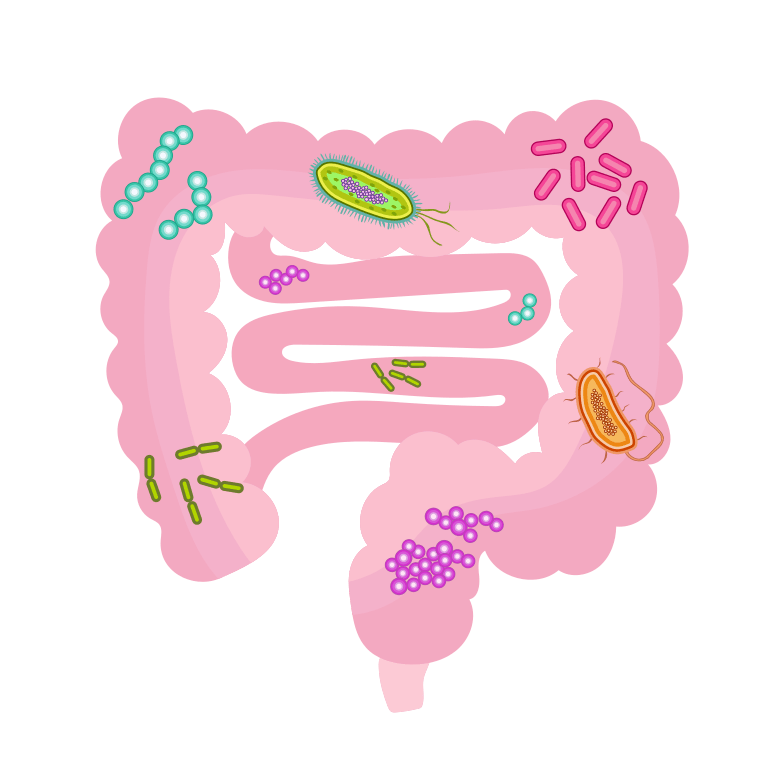
The human microbiota is comprised of trillions of microorganisms that have both bacterial and viral origins. They work together with the immune system to fight the invasion of pathogens. They also help to carry out metabolic functions, extract energy like short-chain fatty acids, and source essential nutrients and vitamins.
Now it has been found that there is a possible link between your gut microbiome and cancer. Some viruses and bacteria found in the gut have been linked to approximately 20% of the global cancer cases. This shows that the gut controls and regulates numerous activities in your body. The simplest dysregulation in the gut can lead to a myriad of diseases in the body, including cancer.
The Link between cancer and gut microbiome
“As the ‘forgotten organ,’ the gut microbiome has increasingly established associations with various health issues, including cancer,” said Dr Adeel Khan, a haematologist/oncologist and epidemiologist serving as an assistant professor of medicine and public health at the University of Texas Southwestern Medical Center. “This is a highly active area of research and posits that the gut microbiome has ties to cancer risk, cancer progression, and even treatment resistance,” he added.
A dysbiosis or dysregulation in the gut causes pathogenic bacteria to multiply and subsequently lead to a gut barrier dysfunction. When this happens, different subpopulations of microbiota will proliferate and give rise to virulence-like factors like toxins (as with E. coli), adhesins (helicobacter pylori), or enzymes (clostridium dificile); and all of these can damage the cells found in the gut epithelium. Damage to these cells can give rise to oxidative stress, inflammation, and eventually carcinogenesis. Continuous oxidative stress can cause significant damage to the DNA, disrupt cell signalling processes, and also cause dysfunction of mitochondria. These effects of dysbiosis can result in cancer.
Overall, as gut dysbiosis increases, there will be an increase in proinflammatory bacteria which will in turn weaken the immune system. A weakened immune system is unable to completely remove mutant cells, thereby causing more establishment and growth of tumors.
“Looking at individual cancers, it intuitively makes sense that associations have been made between the gut microbiome and gastrointestinal cancers including hepatocellular carcinoma, pancreatic cancer, gastric cancer, and colorectal cancer,” Dr Khan said. “But fascinatingly, associations have also been made to blood cancers such as multiple myeloma, lung cancer, breast cancer, and others. The ties to non-gastrointestinal cancer would suggest one or more systemic effects that the gut microbiome is having that modulate carcinogenesis,” he added.
According to Dr Khan, it is still unclear if the link between the gut microbiome and cancer is truly causal as opposed to correlational in vivo, and even if so, the mechanisms that explain the connection remain that much more unclear.“It is most likely that some links are directly causal (such as the well-known H. pylori and gastric cancer link via the bacteria’s oncogenic CagA toxin) while others are indirectly causal or correlational,” he said.
“Hypotheses range from pro-inflammatory and immunomodulatory changes (e.g., Shigella flexneri causing necrotic inflammation), bacterial toxin secretion (e.g., Cytolethal distending toxin by E. coli causing replicative DNA stress), cell signalling alteration (e.g., Fusobacterium nucleatum binding to E-cadherin on colon cells, inappropriately activating β-catenin signaling), hormone disruption (Clostridium scindens converting cortisol into androgen precursors promoting prostate cancer), and others”, he added.
What does science say about the link between gut microbiome and cancer?
Evidence from scientific studies shows that changes or alterations in the gut microbiota can make humans susceptible to cancer. This dysregulation in the gut microbiota will cause commensal bacteria – bacteria that are a normal part of the microbiota – to invade the lining of the gut and tissues surrounding it thereby causing inflammation. When chronic, these inflammations can lead to early onset of tumors.
This study evaluated the gut microbiota of 30 Lung cancer patients, and 30 non-lung cancer patients. They discovered that the control group had higher levels of phylum actinobacteria and genus bifidobacterium, while patients with lung cancer had high levels of enterococcus. Enterococcus bacteria are known to cause infections in patients who have a compromised immune system, for example cancer patients. However, phylum actinobacteria found in the control group plays an important role in maintaining balance in the gut, and this was mostly absent in the group with lung cancer.
Another study analyzed the gut microbiome of 8 patients with cervical cancer who had not yet received treatments, and 5 women without cervical cancer. The result of the study showed that there were differences in the diversity of microbiota between the patients with cervical cancer and the control group.
These studies are part of a growing body of research evidence that suggests a strong correlation between the gut microbiome and the development of cancer.
Can the link between gut and cancer lead to therapeutic options?
“Time will tell, but I think so,” said Dr Khan. “As we identify the pathways and characterise their specific mechanisms, opportunities will arise for small molecule inhibitors or monoclonal antibodies to be developed that inhibit the carcinogenic effects,” he added. “It is also possible that carefully selected antibiotics or medical-grade probiotics and faecal transplants may in the future be beneficial in oncology”, he said. “Currently, the clinical applications are far off, but as the basic science evolves, therapeutic opportunities will arise,” he added.
Activities that can cause dysregulation of the gut microbiome
Having established how gut dysregulation can contribute to cancer, it is essential to understand the factors that can lead to dysbiosis.
Dysbiosis of the gut can be caused by some factors, like:
High-fat diet
High-fat diet causes a modified production of bacterial metabolites which makes the host more susceptible to inflammation. Also, high-fat diets weaken the adherence of tight junction proteins in the gastrointestinal tract. When this happens, endotoxins produced by pathogenic bacteria begin to penetrate through the portal veins, leading to dysregulation in the gut microbiome.
Antibiotics
Long-term use and treatment with antibiotics can lead to an imbalance in the gut microbial system. Using rRNA gene sequencing, a study evaluated the short and long-term effect of ampicillin, metronidazole, vancomycin and neomycin. They found that these common antibiotics had a long-term negative effect on the intestinal microbiota. These negative effects can increase the risk of host disease by causing irreversible changes in the makeup of the intestinal microbiota. Other medications, such as morphine, also affected the quantity and composition of the gut microbiome
Smoking
A study compared the gut of smokers and non-smokers. They found that non-smokers had a microbiota community with more healthy bacteria, while smokers had a dysregulation in their gut as well as a reduction in healthy bacteria.
Alcohol
A study that compared the gut microbiota of people with alcohol use disorder and healthy controls. They found an abundance of Bacteroidetes and Fusobacteria in people with alcohol use disorders. Previous studies have also linked alcohol consumption with an increase fusobacterium in cancer tissue. This suggests that an abundance of Fusobacterium caused by alcohol intake can cause tumorigenesis. There was also an increase in Proteobacteria phylum and Gammaproteobacteria in alcoholics, and these bacteria have been linked to inflammation.
How can you maintain a healthy gut?
Here are some recommendations from Dr Khan:.
- In general, the most modifiable factors are managing your comorbidities if any (e.g., uncontrolled diabetes), maintaining bowel regularity, and consuming a proper diet.
- What constitutes a proper diet is an evolving target, but ingesting diverse, plant-rich foods and avoiding ultra-processed foods and those with excess refined sugar and no fibre are consistently shown to be favorable.
- Naturally bacteria-rich foods, such as yoghurt, kimchi, and sauerkraut, are likely the best sources of probiotics.
Conclusion
Several studies have shown that dysregulation in the gut microbiome can lead to the onset of numerous diseases, including cancer. A strong understanding of the link between the gut and cancer offers a strong potential for treatment and other therapeutic opportunities.
Header Image Source: from Wikimedia Commons
Edited by Karli Norville
References
Zhuang H, Cheng L, Wang Y, et al. Dysbiosis of the Gut Microbiome in Lung Cancer. Front Cell Infect Microbiol. 2019;9:112. Published 2019 Apr 18. doi:10.3389/fcimb.2019.00112
Wang Z, Wang Q, Zhao J, et al. Altered diversity and composition of the gut microbiome in patients with cervical cancer. AMB Express. 2019;9(1):40. Published 2019 Mar 23. doi:10.1186/s13568-019-0763-z
Chae YR, Lee YR, Kim YS, Park HY. Diet-Induced Gut Dysbiosis and Leaky Gut Syndrome. J Microbiol Biotechnol. 2024;34(4):747-756. doi:10.4014/jmb.2312.12031
Huang C, Feng S, Huo F, Liu H. Effects of Four Antibiotics on the Diversity of the Intestinal Microbiota. Microbiol Spectr. 2022;10(2):e0190421. doi:10.1128/spectrum.01904-21
Lee SH, Yun Y, Kim SJ, et al. Association between Cigarette Smoking Status and Composition of Gut Microbiota: Population-Based Cross-Sectional Study. J Clin Med. 2018;7(9):282. Published 2018 Sep 14. doi:10.3390/jcm7090282
Du Y, Li L, Gong C, Li T, Xia Y. The diversity of the intestinal microbiota in patients with alcohol use disorder and its relationship to alcohol consumption and cognition. Front Psychiatry. 2022;13:1054685. Published 2022 Dec 22. doi:10.3389/fpsyt.2022.1054685
Kim M, Lee ST, Choi S, et al. Fusobacterium nucleatum in biopsied tissues from colorectal cancer patients and alcohol consumption in Korea. Sci Rep. 2020;10(1):19915. Published 2020 Nov 16. doi:10.1038/s41598-020-76467-7
 OncoBites

Leave a comment