By Christina Andrea Alvear
Reading time: 5 minutes
What is Chordoma and how is it Treated?
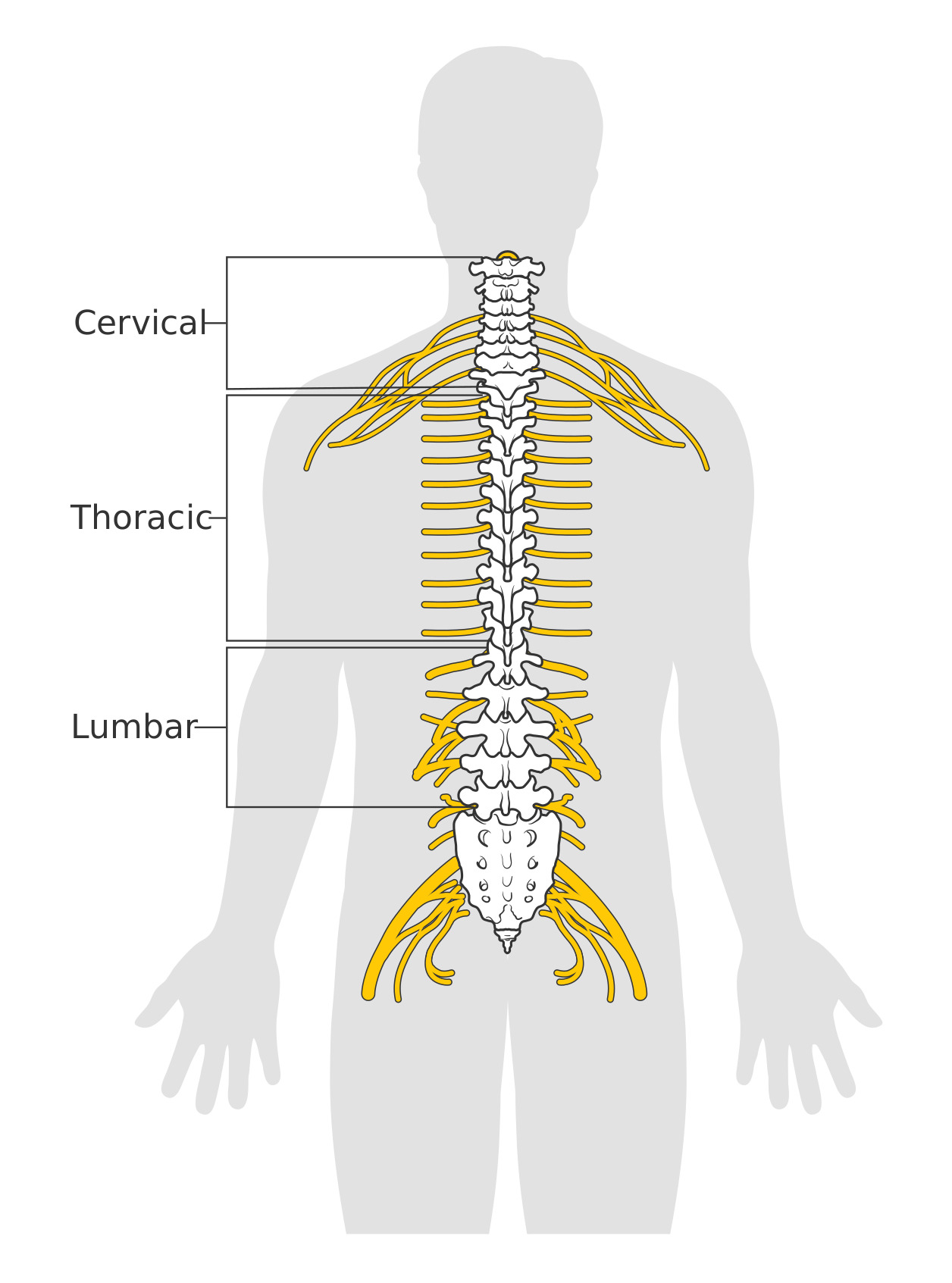
Headaches, facial numbness, and double vision can be associated with mild conditions such as migraines and low blood sugar. Unfortunately, for some patients, this could be a sign of a difficult to treat condition. A chordoma is a rare form of cancer that can form at the base of the skull, the spine, or the tailbone area. In normal development, there are a specific set of cells responsible for developing the nervous system and becoming the spine. Chordomas are thought to be remaining embryonic tissue that grows uncontrollably and forms tumors in these areas.. For most patients, it goes unnoticed because of its slow growth and is identified during the late stages of the disease. Chordomas can happen in any age group, but are more often seen in men between the age of 40-60 years of age.

Figure 1. Location of chordomas in patients. Chordomas can occur in three areas: at the base of the skull, along the spine, or the tailbone. Image source: Cleveland Clinic https://my.clevelandclinic.org/health/diseases/17916-chordoma
The most common method to treat this cancer is by removing as much of the tumor as possible in one piece. However, removing all of the cancer cells is difficult because of its location near the nervous system and blood vessels. Unfortunately, chemotherapy is an ineffective treatment. In cases where the tumor cannot be completely removed, radiotherapy is used to control the disease.
The Big Picture of Genetics and Chordoma
Understanding the role of genes in cancer is important in determining what type of cancer an individual has and how to treat the condition. Although we don’t have all the answers, genes give clues of why cells malfunction and become cancerous. There are many genes responsible for the on and off switch of metabolic processes in the body. For cancer, it involves a mutation in either the cell cycle, expressing a protein to evade the immune response, or turning off the safety switch of genes that protect against development of tumors. Every cancer has its own profile and strategy with overlapping features.
Genetic Profile of Chordoma
There are different mutations observed in the tissue of chordoma. Some of those mutations either involve genes involved in vertebrate development, regulating the immune response, or cell growth. Brachyury is a gene responsible for the early development of vertebrae development. Brachyury mutation is often seen in family generations. Similar to other cancers, chordoma is also often associated with genes that are responsible for managing cell growth and survival. For example, CDKN2A and PTEN are genes that prevent cells from growing out of control. SMARCA4 is another gene associated with the development of chordoma. This gene is responsible for helping DNA to be packaged into chromosomes. ADAR is the gene responsible for making a protein that controls the innate immune system response. Although this is not an exhaustive list of all of the mutations seen in this disease, the following does highlight future approaches to treating this rare disease instead of using nonspecific chemotherapy and radiotherapy.

Immunotherapy strategies used to treat chordoma cells: Immune checkpoints, vaccines, and cell therapy. Many of these treatments are in the clinical phase. Image source:Wang, X., Chen, Z., Li, B., Fan, J., Xu, W., & Xiao, J. (2022). Immunotherapy as a Promising Option for the Treatment of Advanced Chordoma: A Systematic Review. Cancers, 15(1), 264-. https://doi.org/10.3390/cancers15010264
Clinical Trials, a Hope to a Better Future
For a person that is diagnosed with chordoma, the future can look bleak. However, enrolling in clinical trials is a way to advance new medical approaches that could more effectively treat this condition in the future. Immunotherapy and small molecule inhibitors are the new wave of treatments that are tailored to treat the type of cancer and its behavior during the cell growth cycle. One of the reasons why white blood cells don’t attack cancer cells is because the immune system recognizes that cancer cells are part of the cells that make up the body. The overall approach to overcome this challenge is to get the immune system to recognize that, although a cancer cell is part of “self”, it is still a threat. To accomplish this, there are a couple of approaches used in immunotherapy. Immunotherapy either involves designing a patient’s white blood cells to bind to a protein that is found in cancer, creating a vaccine that alerts white blood cells to attack cancer cells that have a particular protein attached to them, or promoting a white blood cell to attack cells in the body by overriding the “off” switch that tells immune cells not to harm cells, or to ramp up white blood cell activation.
In the case of chordoma, there are clinical trials that utilize different approaches to targeting this cancer. For example, there is a vaccine designed to attack cells that make brachyury proteins. Another clinical trial involves using nivolumab, an antibody that targets PD-1, a protein found on T-cells. PD-1 is the stop sign that prevents this white blood cell from killing other cells. PD-L1 is an important target because chordoma samples have shown that they use this pathway to decrease the immune response and program T-cell death. Overall, these clinical trials don’t have the magic bullet on curing cancer. However, they do provide a glimpse of a future that can provide treatments that target chordoma cells over healthy cells, ultimately prolonging life.
Chordoma survivors face insurmountable challenges that include physical, spiritual, and financial struggles. Researchers are at the forefront of advancing the limitations of cancer treatment. As more studies shed light on this devastating disease, it is anticipated that there is a brighter future for survivors.
References
Desai, R., Pelargos, P. E., & Dunn, I. F. (2024). Chordoma: Genetics and Contemporary Management. International journal of molecular sciences, 25(11), 5877. https://doi.org/10.3390/ijms25115877
https://my.clevelandclinic.org/health/diseases/17916-chordoma
Wang, X., Chen, Z., Li, B., Fan, J., Xu, W., & Xiao, J. (2022). Immunotherapy as a Promising Option for the Treatment of Advanced Chordoma: A Systemic Review. Cancers, 15(1), 264-. https://doi.org/10.3390/cancers15010264
Header image copyrighted by Wikimedia Commons https://commons.wikimedia.org/wiki/File:Diagram_of_the_spinal_cord_CRUK_046.svg
 OncoBites

Leave a comment