Reading time: 5 minutes
Jessica Desamero
Types of chromosomal abnormalities found in cancer
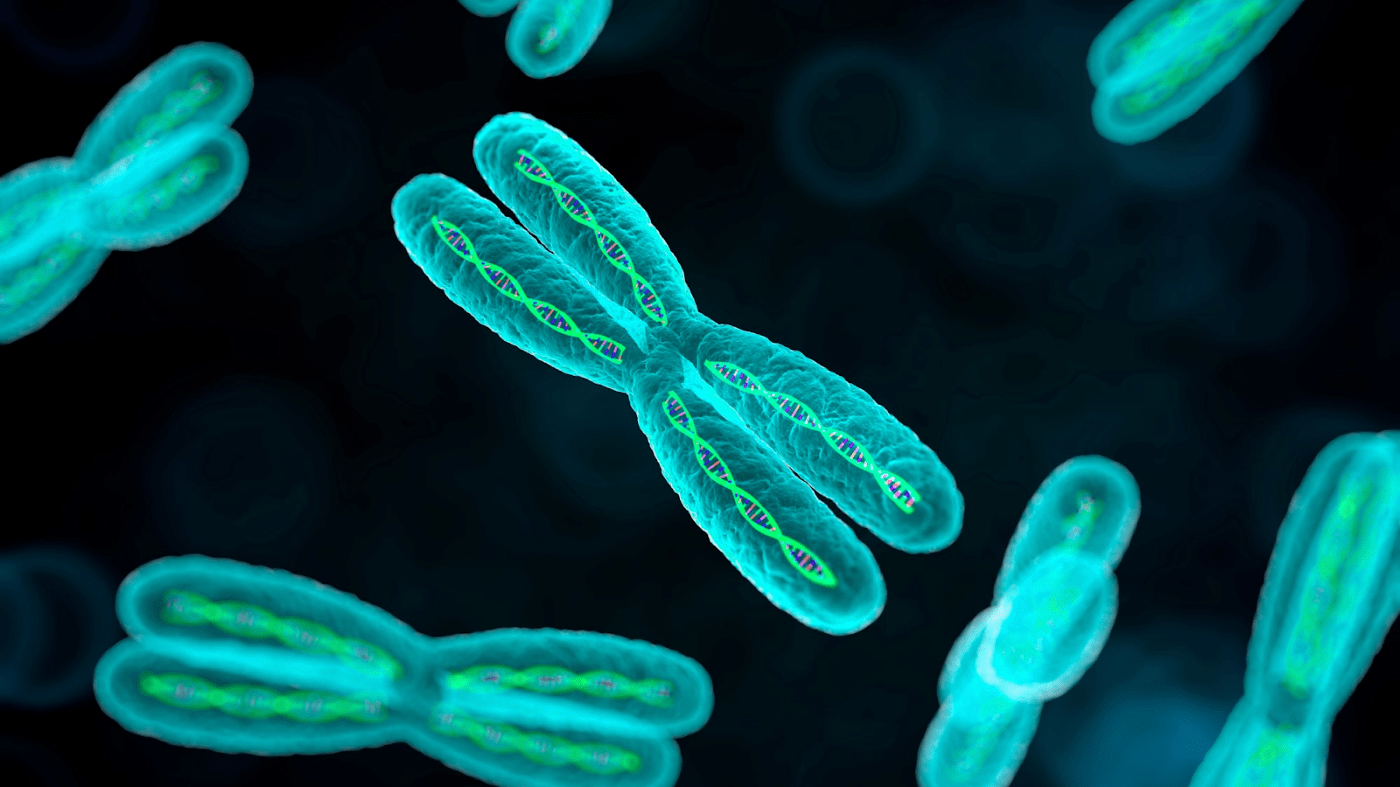
Chromosomes are like books that store vast amounts of information, more precisely, DNA building blocks (genes) that compose all our genetic information. In this example, genes may seem as words spanning across the chromosomes that possess order and structure to give meaning to these books. Following this analogy, we have realized that if some words are missing, repeated, or jumbled up on a page, the book can still be read and understood. However, if too many pages have mistakes, the reader may get confused and become unable to comprehend the book’s messages. Or worse, they may misinterpret the meaning and spread this misinformation to others. In the same fashion, chromosomes in a cell can sometimes become altered. A few alterations may be okay, but if too many changes occur, serious problems may arise within a cell. These disruptive modifications are known as chromosomal rearrangements and are involved in a wide range of disorders such as cancer.
More specifically, chromosomal rearrangements are abnormalities wherein the structure of a native chromosome is changed. The types of rearrangements range from simple to complex, depending on how many chromosomes and breakpoints (chromosomal regions affected by rearrangements) are involved. Rearrangements can also be further classified as balanced or unbalanced. With a balanced rearrangement, chromosome pieces move around and reorganize (eg. inversion), but there is still the same amount of genetic information. With an unbalanced one, the amount of material is lost or gained, such as when pieces of chromosomes are deleted or duplicated. Alternatively, a piece of one chromosome can break off and attach to a different chromosome (translocation), and this can be balanced or unbalanced, based on the nature of the exchange. Depending on which chromosomal regions and genes are affected, some rearrangement types have no major effect, while others can give rise to cancer development.

Because of genomic instability, these complex rearrangements are frequent in cancer cells. These abnormalities, which fall under the umbrella term chromoanagenesis, can be divided into three categories: chromothripsis, chromoplexy, and chromoanasynthesis. When these cancer-inducing catastrophe events occur, they can increase tumor-growth rates.
Chromothripsis involves clustered shattering of one or a few chromosomes, and the reassembly of the shattered fragments completely differs from the original configurations, leading to many complex genomic rearrangements. Chromoplexy involves a chain of translocations that connects up to 7 or 8 chromosomes. Finally, chromoanasynthesis behaves like chromothripsis in the way that rearrangements are localized in one region or chromosome, but it also includes recurrent duplications and triplications.

How exactly do chromosomal rearrangements cause cancer?
Here are several ways in which rearrangements can encourage tumorigenesis:
1) Changing the number of genes: Rearrangements involving DNA copy number changes can cause tumor suppressor genes to be deleted or oncogenes to be amplified.
2) Dysregulating genes: When rearrangements happen near or within genes and their regulatory elements, gene function and regulation can be disrupted.
3) Forming new gene products: Loci (physical locations of specific genes on a chromosome) are normally far from each other, but rearrangements can bring two of these loci close together to encode oncogenic fusion proteins and create new gene products, some of which can directly drive tumorigenesis.
Recently, a pan-cancer analysis of whole genomes (PCAWG) sequencing study across 38 tumor types has found that the frequency of canonical chromothripsis events is more than 40% for multiple cancer types. In addition, chromothripsis can affect multiple cancer-associated genes at the same time, as previously observed in chordoma (by disrupting the tumor suppressors CDKN2A, WRN, and FBXW7) and lung adenocarcinoma (by driving the formation of fusion oncogenes, like EML4-ALK, CD74-ROS1, and KIF5B-RET). On the other hand, chromoplexy has been found in prostate cancer, and more recently in Ewing sarcoma, where it has been shown that it dysregulates multiple cancer genes simultaneously and creates frequent oncogenic fusion genes (e.g. EWSR1-ETS fusions). Interestingly, chromoanasynthesis is the least understood regarding its role in human cancers, although one study has revealed that chromoanasynthesis causes amplification of a proto-oncogene (ERBB2) in a set of early stage breast cancer samples.
Advances in better understanding the origin mechanisms of cancer-inducing chromosomal rearrangements
As previously mentioned, we know that a catastrophic event of genomic instability causes these chromosomal rearrangements, but what are the exact origins of these rearrangements? Unfortunately, chromoplexy and chromoanasynthesis remain obscure in this regard. However, various studies have shed some light on chromothripsis development.
According to research, one overall driver is DNA damage. Mainly, rearrangements are created when severely damaged, broken DNA are being repaired by one of the several repair pathways. With every type of repair, there tends to be at least a few mutagenic outcomes. For example, in a pathway called nonhomologous end-joining (NHEJ), any two ends of DNA in the cell can be joined together, regardless of whether their sequences are compatible or not. This process will end in general chromosomal rearrangements, as well as insertions and deletions.
The other overall driver is cell division error. Interference in mitosis (cell division process) can leave defective chromosomes more prone to DNA damage and chromosomal translocations. Moreover, chromosome missegregation during cell division can create abnormal nuclear structures that can accelerate the rate of genomic rearrangement formation. For example, one type of structure (micronucleus) can rupture the barrier surrounding the cell’s nucleus, which in turn would cause incomplete DNA replication, massive DNA damage, and ultimately catastrophic chromosome shattering. Another abnormal structure (chromosome bridge) may cause chromothripsis when this structure eventually breaks. Chromosome bridges form when a fused chromosome with two centers is pulled apart, and they can be broken by forces such as enzyme attacks and mechanical forces.

Thanks to the many advancements in genome sequencing technologies and computational analyses, as well as the developments in various experimental systems, we now comprehend more about the mechanisms behind chromosomal rearrangements. Developing ways to study the mechanisms of origin of least understood events such as chromoplexy and chromoanasynthesis would be vital to understand how these rearrangements promote tumorigenesis and ultimately help us to uncover the enormous complexity of cancer genomes. This added knowledge could greatly aid in developing novel anticancer treatments or targeted therapies, such as drug strategies that would help suppress continued rearrangements and thus reduce the occurrence of cancer.
Edited by Ana Isabel Castillo Orozco
Main Works Cited
Dahiya R, Hu Q, Ly P. “Mechanistic origins of diverse genome rearrangements in cancer.” Semin Cell Dev Biol. 123 (March 2022): 100-109. doi: 10.1016/j.semcdb.2021.03.003. Epub 2021 Apr 3. PMID: 33824062; PMCID: PMC8487437.
Pellestor F, Gaillard JB, Schneider A, Puechberty J, Gatinois V. “Chromoanagenesis, the mechanisms of a genomic chaos.” Seminars in Cell & Developmental Biology. 123 (2022): 90-99. ISSN 1084-9521, https://doi.org/10.1016/j.semcdb.2021.01.004.
Shorokhova M, Nikolsky N, Grinchuk T. “Chromothripsis-Explosion in Genetic Science.” Cells. 10, no. 5 (May 2021):1102. doi: 10.3390/cells10051102. PMID: 34064429; PMCID: PMC8147837.
Image Citations
https://www.livescience.com/27248-chromosomes.html
https://sml.snl.no/kromosomavvik
https://commons.wikimedia.org/wiki/File:Chromothripsis.svg
Nuclear abnormalities: Wikimedia Commons
 OncoBites


Leave a comment